This post may contain affiliate links. If you click on one and make a purchase, I might earn a small commission (at zero extra cost to you), which helps me keep this blog running.
When we plan an international trip, we usually compare flights, check hotel prices, look at baggage rules, and think about the itinerary. The travel documents often get checked later, sometimes when the ticket is already paid for. And sometimes that can backfire.
And when I say the documents should be checked, I don’t mean only for the obvious problems, like an expired passport or a missing visa. Those are serious, of course, but they are also the things most people know they should check.
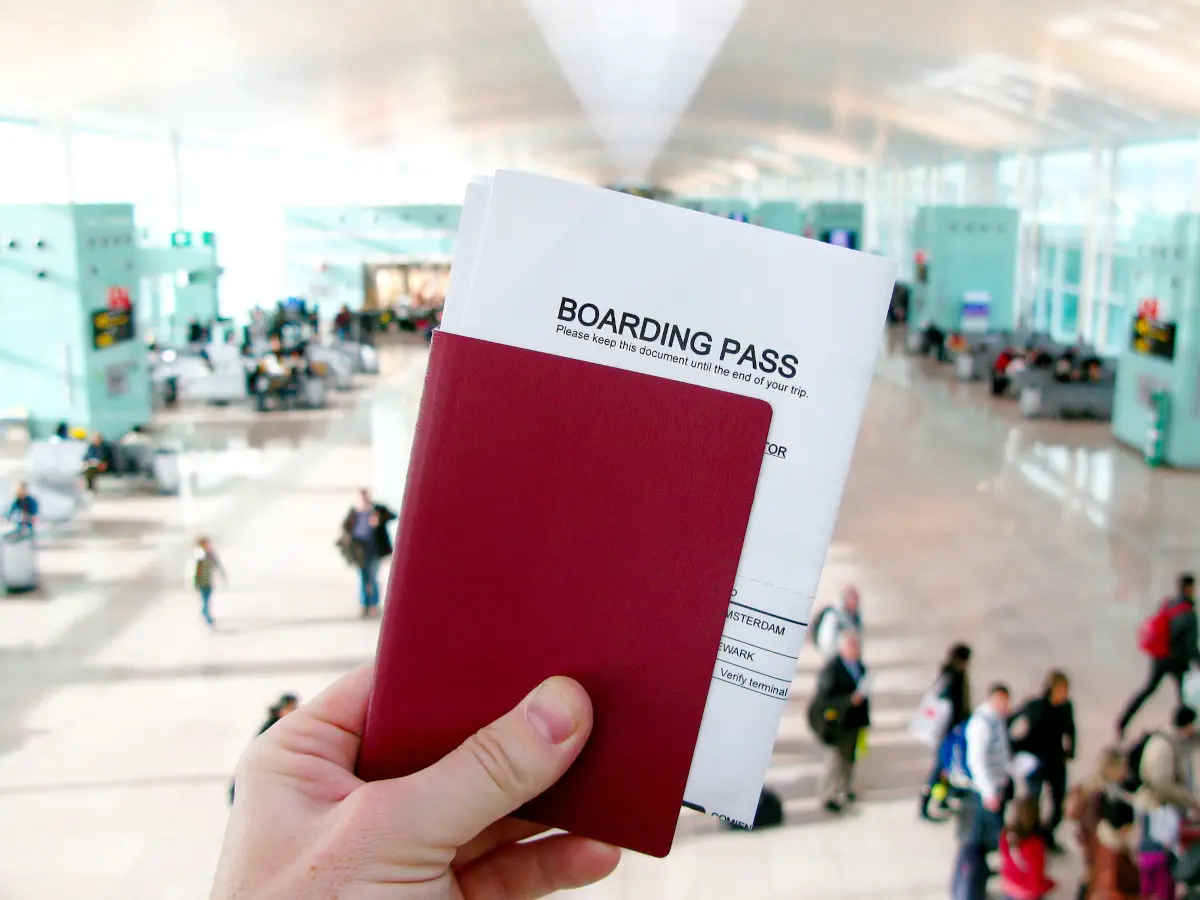
ID 37508675 ©Icon72 | Dreamstime.com
The more annoying problems are often smaller and easier to miss. A passport may still have time left before it expires, but not enough for the country you want to visit. An ID card may look usable until an airline or border officer decides the damage or alteration makes it unacceptable. A layover may look simple when you book it, but it can become more complicated because of transit rules, luggage, border control, or separate tickets.
I recently covered the story of a woman who was refused boarding after cutting her ID card so it would fit in her wallet. Yes, true story, I heard it from the source. This is why I would not treat an international travel document checklist as something to do the night before a flight. It belongs at the booking stage, before you pay.
Before you book, check:
- passport expiry date;
- passport issue date;
- blank passport pages;
- visa, eVisa, ETA, ESTA, or ETIAS rules;
- transit country requirements;
- ticket name spelling;
- document condition;
- children’s documents, if relevant.
An Unexpired Passport May Still Fail the Rules for Your Trip
One of the biggest travel document mistakes is assuming that a passport is fine as long as it has not expired.
That is not always how international travel works.
Some countries require your passport to be valid for a certain period after you leave, not just on the day you arrive. For non-EU nationals entering the EU/Schengen area, the European Union says the travel document should be valid for at least 3 months after the date you intend to leave the EU and must have been issued within the previous 10 years.
This is also where many people get confused by the six-month passport rule. It is not a universal rule that applies everywhere in the same way. Some countries require six months of passport validity. Some require three months beyond the departure date. Some require validity for the duration of stay. Airlines may also apply destination and transit rules at check-in, because they can be responsible for transporting passengers who do not meet entry requirements.
So before you book, do not only ask:
“Is my passport expired?”
Ask:
“Is my passport valid long enough for every country on this itinerary?”
That includes the destination, the transit country, and sometimes the country where you return from if you are booking a multi-city trip.
Check Passport Validity Rules for Your Exact Destination
Passport rules are destination-specific, so this is not a place to rely on general advice. Always check the official requirements for your exact destination, nationality, passport type, and route before booking. A good example is traveling to countries in the Schengen area.
For Italy, the U.S. State Department lists a passport validity requirement of at least 3 months beyond the planned date of departure from the Schengen area, while also recommending 6 months of validity. It also lists 2 blank passport pages for the entry stamp.
Germany has a similar rule for passport validity: the U.S. State Department lists 3 months validity beyond the date of departure and 2 blank passport pages, while noting that 6 months validity is recommended but not required.
France is slightly different on blank pages: the U.S. State Department lists passport validity as 3 months beyond the date of departure from the Schengen area and says travelers need 1 blank passport page for stamps.
Spain is another useful example because the State Department lists 3 months of validity beyond the departure date and 1 blank passport page per entry and exit.
This is why broad advice like “make sure your passport is valid for six months” is useful as a safety margin, but not precise enough as a rule. The real rule depends on the destination, your nationality, the type of passport you hold, and your route.
Do You Need Blank Passport Pages to Travel Internationally?
Some people focus only on the passport expiration date and forget that countries may also require blank pages for entry stamps, exit stamps, or visas. The number is not identical everywhere. Some destinations require one blank page, others require two, and some rules depend on whether the page is needed for entry, exit, or visa stamps.
If your passport is nearly full, you should check whether the destination requires one full blank page, two blank pages, or blank pages for both entry and exit. If you travel often or are planning a longer itinerary with multiple border crossings, you have to take all the requirements into consideration.
A good pre-booking question is:
“Do I have enough blank passport pages required for this trip?”
Not “do I still have some white space left somewhere.”
Check visa, eVisa, ETA, and electronic travel authorization rules
Visa-free does not always mean “no paperwork.”
With travel authorization systems changing in several destinations, you should always check whether your trip requires an ETA, eVisa, ESTA, ETIAS, or another pre-travel authorization. Some systems are not called visas, but they can still be required before boarding.
The UK ETA is a strong example. GOV.UK says an Electronic Travel Authorisation lets eligible travelers visit the UK, Jersey, Guernsey, or the Isle of Man for up to 6 months. The ETA costs £20, and GOV.UK also states clearly that an ETA does not guarantee entry.
The UK government also says travelers must have their visa, ETA, or certificate of application before traveling to the UK, and that travelers may also need a visa or ETA when transiting through the UK.
I guess we could say that the rule is simple: before you book an international flight, check whether your destination requires a visa, eVisa, ETA, ESTA, ETIAS, or another travel authorization for your nationality and for your reason for travel.
My tip: My tip: do not rely on what a friend needed two years ago, or even on what you needed for the same country in the past. Check the current requirement before booking, because entry rules can change (sometimes for the better).
Check Transit Visa and ETA Rules Before Booking
Sometimes, the transit country may have its own requirements. The UK government says travelers may need a visa or ETA if they are transiting or traveling through the UK, for example, when changing flights at a UK airport.
The rules can also depend on whether you pass through border control. GOV.UK explains that the type of UK transit visa depends on whether you go through UK border control. A Direct Airside Transit visa applies when changing flights without going through border control, while a Visitor in Transit visa may apply when going through border control and leaving the UK within 48 hours.
For ETA specifically, GOV.UK says an ETA can be used to transit through a UK airport if you pass through border control, while travelers transiting through a UK airport without passing border control may not need an ETA; the official guidance also says to check with the airline if unsure.
Transit visa requirements should be part of any serious international travel document checklist. This is relevant and you should check the details when:
- you booked separate tickets;
- you need to collect and recheck luggage;
- you change airports;
- you need to leave the secure transit area;
- your layover is long;
- your return route is different from your outbound route;
- you are traveling with a passport from a country that has extra transit rules.
Can You Travel With a Damaged Passport or ID Card?
After a trip, my husband dropped his passport when he got home and got out of the taxi. We saw it the next day, on the street, in front of our house. It was in a bad shape, as you can imagine!
Yes, it was valid. Yes, it had many blank pages. But in its state… well, as you can imagine, it would have been refused by everyone!
A passport or ID can be refused if it is damaged, altered, unreadable, or no longer accepted as a valid identity document. That may include:
- a cut ID card;
- a passport page that is torn;
- water damage;
- peeling laminate;
- a damaged photo page;
- a broken or unreadable chip;
- missing pages;
- unofficial changes;
- a document where the name, birth date, or photo cannot be clearly verified.
What Counts as a Damaged Travel Document?
A document may create problems if the photo page is damaged, the laminate is peeling, pages are torn or missing, the chip is unreadable, the document has water damage, the text is hard to read, or the document has been cut, repaired, laminated, or modified.
Make Sure the Name on Your Ticket Matches Your Passport
The name on your ticket should match the name in the passport or official travel document you will use. I know this sounds basic, but I have heard of cases where people were denied boarding because their name was spelled incorrectly or they had two first names and only mentioned one of them when they booked the flight…
What you should be paying attention to and when is this (even more) important:
- you recently changed your name after marriage or divorce;
- your passport uses a different surname than your booking profile;
- your name includes accents or diacritics;
- your first name and surname were entered in the wrong fields;
- you booked quickly through an airline app;
- a family member booked the ticket for you;
- the child’s document has a different surname from one parent;
- your middle name appears in one place but not another.
Small formatting differences may not always be a problem, but spelling mistakes can be. A one-letter typo in a surname is not something to ignore. Fixing it later can cost money, and with some tickets it can become more complicated than it should be.
Check Children’s Travel Documents Separately
Children’s travel documents deserve their own check because rules can be stricter and more situation-specific.
Depending on the destination and family situation, children may need:
- their own passport;
- a visa or ETA;
- a birth certificate;
- parental consent documentation;
- custody or guardianship documents;
- documents showing permission to travel with one parent, grandparents, or another adult.
This is especially important for separated/divorced parents, blended families, grandparents traveling with grandchildren, school trips, and children with a different surname from the accompanying adult.
Use Official Travel Document Tools Before You Book
The best source for travel document requirements is usually the official government website for the destination. That is where you should check the legal entry rules: passport validity, blank passport pages, visa requirements, ETA or eVisa rules, transit requirements, and any special conditions that apply to your nationality.
But please go a little bit further. Official government pages tell you the legal rule. Airline document checkers show how the airline may apply that rule at check-in or boarding. Use both, because the airline is the one deciding whether you can board the flight.
IATA says its Travel Centre provides personalized passport, visa, and health requirement information based on the traveler’s personal details and itinerary, and that it is based on a database used by virtually every airline, with information gathered from more than 1,000 official sources worldwide.
Air Canada’s travel documents page also states that it is the traveler’s responsibility to carry all proper, valid travel documents needed to enter, exit, or transit through each country or region on the itinerary, and that outbound requirements may differ from return requirements.
I am emphasizing that last part because it is easy to miss. Your outbound flight may be fine, but your return route may pass through a different country. Your first destination may not require a visa, but the second one might. Your documents may be accepted for entry but not for transit on a different route.
So before booking, check:
- the destination government website;
- the airline document checker;
- IATA Travel Centre or Timatic-based information;
- your own government’s travel advisory page;
- the embassy or consulate if anything is unclear.
I know, this may sound excessive, but it takes less time than trying to solve a document problem at the airport.
Don’t Wait Until Online Check-In to Find a Document Problem

ID 47586546 ©Anyaberkut | Dreamstime.com
Online check-in sometimes asks for passport details, visa information, destination address, or other travel information. That can make people think the document check happens at online check-in.
If you discover a passport validity issue 24 hours before departure, you may have very few options. If you discover that you need an ETA or eVisa at the last minute, you may still get approval quickly in some cases, but you should not rely on that. If your passport is damaged, you may need an emergency document or a replacement. If your name is wrong on the ticket, the airline’s correction policy will decide how easy or expensive the fix is.
This is why the first document check should happen before booking, not during online check-in. I would check again after booking, one month before travel, and once more in the final week before departure. But the most important check is the first one, because that is when you can still change the route, renew a passport, correct a name, or choose a different flight without panic. Of course, it all depends on how much time there is before you purchase the tickets and your actual trip.
International Travel Document Checklist Before Booking a Flight
ID 43442352 ©Travnikovstudio | Dreamstime.com
Use this before you pay for an international flight.
Passport and ID
Check:
- passport expiry date;
- passport issue date;
- whether the passport was issued within the accepted period for the destination;
- blank passport pages required;
- passport condition;
- ID card condition, if traveling with an ID card;
- whether the document is accepted for that route;
- whether the document is valid for every country on the itinerary.
Entry rules
Check:
- visa requirements;
- eVisa requirements;
- ETA or electronic travel authorization requirements;
- ESTA or other pre-travel authorization systems;
- ETIAS status for future Europe trips;
- entry rules for tourism, business, study, or family visits;
- maximum stay allowed;
- proof of accommodation or invitation letter, if required;
- return or onward ticket requirements.
Transit rules
Check:
- layover country requirements;
- whether you pass border control;
- whether you need to collect baggage;
- whether the flights are on separate tickets;
- whether you change airports;
- whether the return route uses a different transit country.
Ticket details
Check:
- exact name spelling;
- first name and surname order;
- middle name rules;
- accents or diacritics;
- date of birth;
- passport number;
- passport expiry date entered correctly;
- nationality selected correctly.
Extra documents
Check, if relevant:
- children’s travel consent;
- birth certificates;
- custody documents;
- travel insurance;
- vaccination or health documents, if required;
- driving permit or international driving permit;
- cruise documents;
- residence permit;
- proof of funds;
- printed and offline copies of important documents.
This list may look long, but the actual check is fast if you do it while booking. It is much harder to fix these things when the flight is tomorrow.
FAQs About International Travel Documents
Can I travel internationally if my passport expires in less than 6 months?
Sometimes yes, sometimes no.
The answer depends on the destination, your nationality, the passport you hold, the transit route, and the airline’s document check. The six-month passport rule is not universal. For example, several Schengen countries list a requirement of 3 months’ validity beyond the planned departure date from the Schengen area, while 6 months may be recommended as a safety margin.
For the UK, GOV.UK says that if you are from outside the EU, Switzerland, Norway, Iceland, or Liechtenstein, you must have a valid passport to enter the UK and it should be valid for the whole of your stay.
So the safest practical answer is this: do not guess. Check the official rule for your exact destination and route before booking.
Is the six-month passport rule required everywhere?
No.
The six-month passport rule is one of the most repeated travel rules, but it does not apply everywhere in the same way. Some countries require six months of passport validity. Some require three months after departure. Some require validity only for the planned stay.
That is why “six months” is useful as a conservative travel habit, but not as a replacement for checking the actual entry rule.
If your passport has more than six months left, you avoid many problems. If it has less than six months left, you need to check carefully before booking.
Do I need blank passport pages to travel internationally?
Often, yes.
Many countries require at least one or two blank passport pages for entry stamps, exit stamps, or visas. Requirements vary. Italy and Germany list 2 blank passport pages, France lists 1 blank page for stamps, and Spain lists 1 blank page per entry and exit.
If your passport is nearly full, check this before you book. A valid passport with no usable blank pages can still create travel problems.
Can I be denied boarding for a damaged passport or ID card?
Yes, it can happen.
If a travel document is damaged, altered, unreadable, cut, missing pages, or no longer accepted as a valid official document, the airline may refuse boarding. Border authorities can also refuse entry if the document cannot be properly verified.
That is why you should never cut, laminate, modify, repair, or “adjust” an official travel document yourself. If it no longer fits your wallet, change the wallet – not the document.
Do I need to check transit visa rules if I am not leaving the airport?
Sometimes, yes.
You may still need to check transit rules even if you don’t plan to leave the airport. Some countries distinguish between airside transit and landside transit. The UK, for example, has different guidance depending on whether you go through border control, and GOV.UK says travelers may need a visa or ETA when transiting through the UK.
You should pay extra attention to this if you booked separate tickets, need to collect luggage, change airports, or pass through passport control.
Conclusion: check documents before you check prices
Cheap flights are tempting. A perfect hotel location is tempting. A short layover can look efficient. But none of that matters if your documents do not match the trip.
Before you book an international flight, check your passport validity, blank passport pages, visa or ETA requirements, transit rules, document condition, and ticket name spelling. Do it before payment, not after packing.
I know, it is not the most exciting part of travel planning. But it is the part that can decide whether your trip starts at the boarding gate or ends there.
Sources:
- https://europa.eu/youreurope/citizens/travel/entry-exit/non-eu-nationals/index_en.htm
- https://travel.state.gov/en/international-travel/travel-advisories/italy.html
- https://travel.state.gov/en/international-travel/travel-advisories/germany.html
- https://travel.state.gov/en/international-travel/travel-advisories/france.html
- https://travel.state.gov/en/international-travel/travel-advisories/spain.html
- https://www.gov.uk/uk-border-control/before-you-leave-for-the-uk
- https://www.aircanada.com/cl/en/aco/home/plan/travel-requirements/travel-documents.html
More amazing articles for you:

Violeta-Loredana Pascal is a communications expert, business mentor, and the founder of Earth’s Attractions and PRwave INTERNATIONAL. A pioneer in the Romanian digital PR landscape since 2005, she holds a degree in Communication and Social Sciences from SNSPA Bucharest. Violeta is a senior trainer at AcademiadeAfaceri.ro, where she leverages over 20 years of experience to teach professional courses in PR strategy and workplace productivity. By blending high-level business consulting with a passion for holistic travel and wellness, she empowers solopreneurs to overcome procrastination, build profitable brands, and design a life of purposeful adventure.