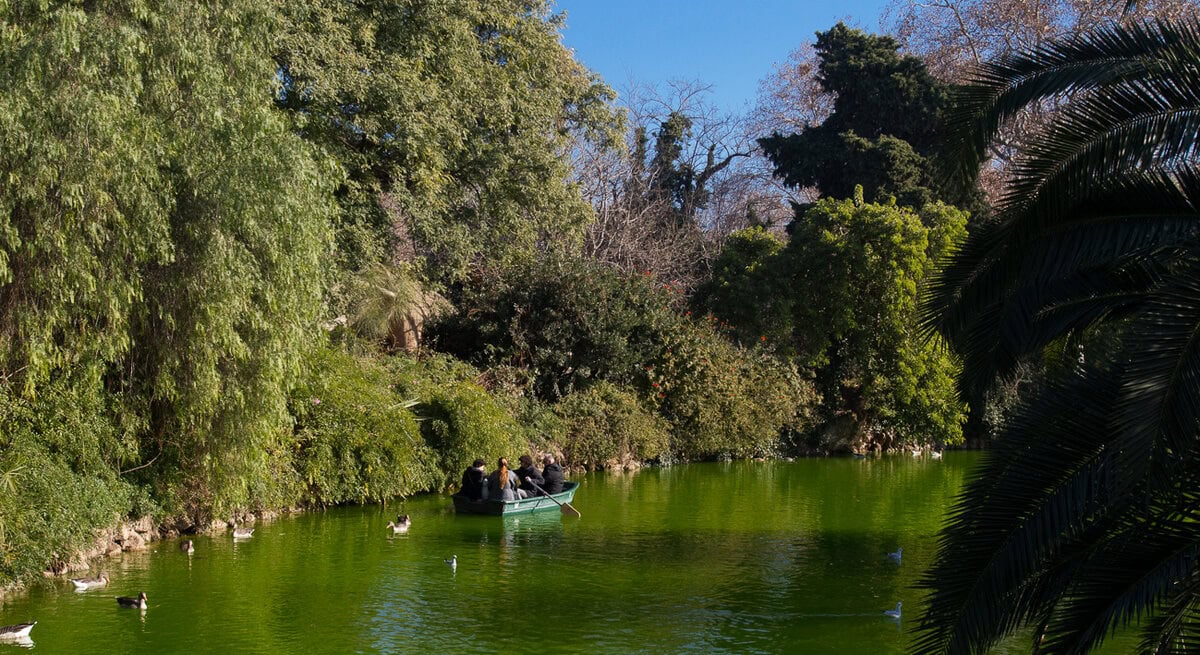
There’s a certain romance to train travel in southern Germany – a gentle unfolding of landscapes where vineyard-clad hills, medieval spires and storybook towns drift past your window like scenes from a film. While I’ve explored much of this region on previous trips, my recent 8-day rail journey, from the fringes of the Black Forest to the historic heart of Franconia, was one I’ll cherish for a long time. Beginning in Freiburg im Breisgau, my southern Germany rail trip carried me onward to Tübingen, Augsburg, Regensburg and Würzburg, each stop revealing its own distinct character. What struck me most was the wondrous blend of rich history and vibrant culture, where breathtaking monuments sit alongside youthful energy, all framed by the beautiful natural landscapes of southern Germany.

I kicked off this rail trip in Freiburg im Brisgau, a beautiful city at the edges of the Black Forest in southwestern Germany. Freiburg is connected by rail to all corners of Germany, and also has an airport which it shares with Basel (Switzerland) and Mulhouse (France). From Freiburg, I made my way to Tübingen before continuing to Augsburg. My next stop was colourful Regensburg, on the banks of the Danube River. From there, I took the ICE (InterCity Express) train to Würzburg, a stunning city roughly halfway between Nuremberg and Frankfurt.
Southern Germany rail trip: 8-day itinerary
- Day 1-2: Freiburg im Brisgau (2 nights)
- Day 3: Train to Tübingen in the morning (1 night in Tübingen)
- Day 4: Train to Augsburg in the morning (1 night in Augsburg)
- Day 5: Morning in Augsburg. Train to Regensburg in the afternoon (1 night in Regensburg)
- Day 6: Regensburg in the morning; train to Würzburg in the afternoon (2 nights in Würzburg)
- Day 7-8: Würzburg
This rail journey across southern Germany, created in partnership with Historic Highlights of Germany, brought together everything I love about travel: captivating historic cities, verdant landscapes, striking architecture and outstanding food and wines (and beer!).
The cities I visited have so much to offer and are best enjoyed at a slower pace. These five cities, Freiburg, Tübingen, Augsburg, Regensburg and Würzburg, are part of the 17 heritage cities known as Historic Highlights of Germany. The 17 cities are typically university towns with a rich historical legacy and a vibrant cultural scene, paired with a wide array of restaurants, local design boutiques and food stores. These cities have another important point in common: they are all easy to explore on foot. Here are my highlights in each city:
Freiburg im Brisgau
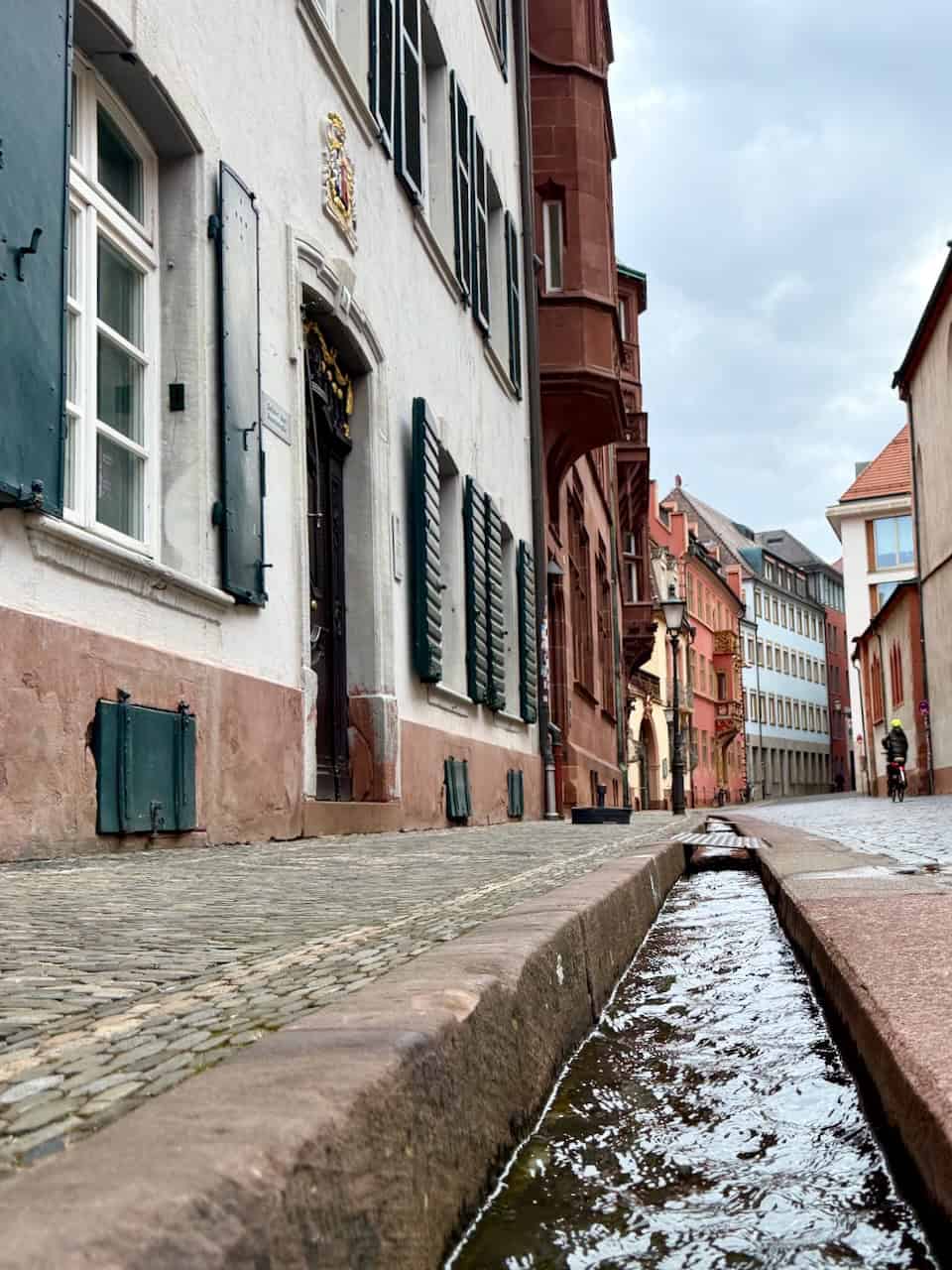
Situated in the southwestern corner of Germany, on the fringes of the Black Forest, Freiburg (map) is a vibrant university city which can trace its roots back to the 12th century. A bustling market town in medieval times, Freiburg has a gorgeous old town that’s dominated by the impressive 13th century Minster. Gurgling water channels (called bächle), fed by the Dreisam river, crisscross the old town – a source of endless fun for kids and a welcome respite during hot summer days. An old saying goes that if a visitor were to accidentally step into a bächle, that person will marry a Freiburger.
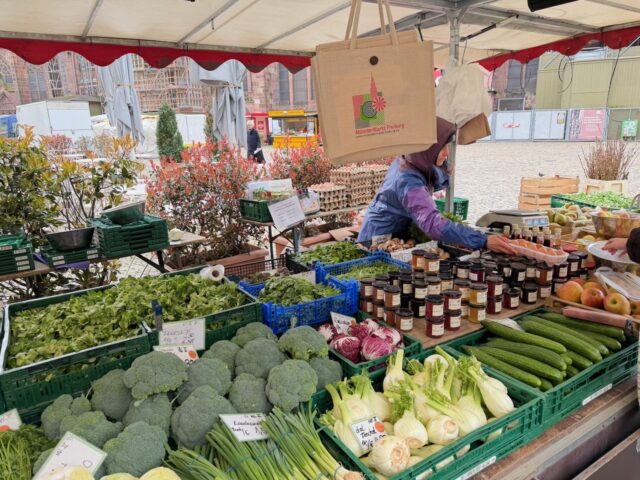
Aside from its historical architecture, Freiburg is also known as one of the most eco-conscious cities in the country. I saw many examples of this: to minimise waste, leftover bread and vegetables are deposited by bakers and markets at covered carts for anyone to take home; locals commute by bike and tram; there are water fountains across the town; food ingredients are sourced from the surroundings (the daily farmers’ market in front of the Cathedral is the place to see, taste and buy them), and there’s a clear focus on locally-designed products, making the town a unique shopping experience.
Highlights of Freiburg
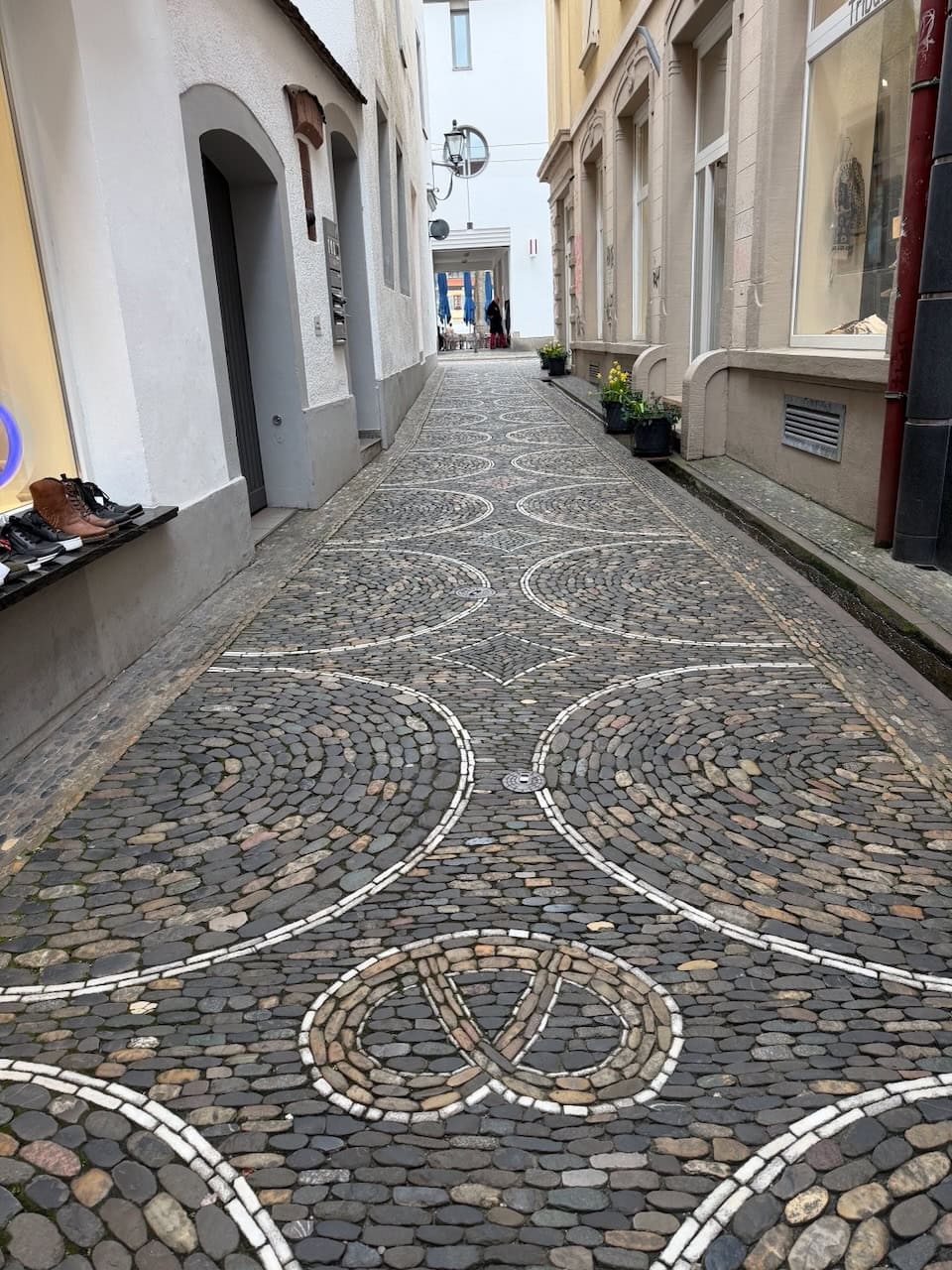
It was a treat to explore the old town, with its unique water channels, beautifully-preserved medieval monuments, striking architecture and pavements covered with cobblestone mosaics. The old town is compact, making it easy to explore on foot – just be mindful of the bachle! As you walk around, look down ever so often to see the cobblestone mosaics, a labour of love by the town’s craftsmen.
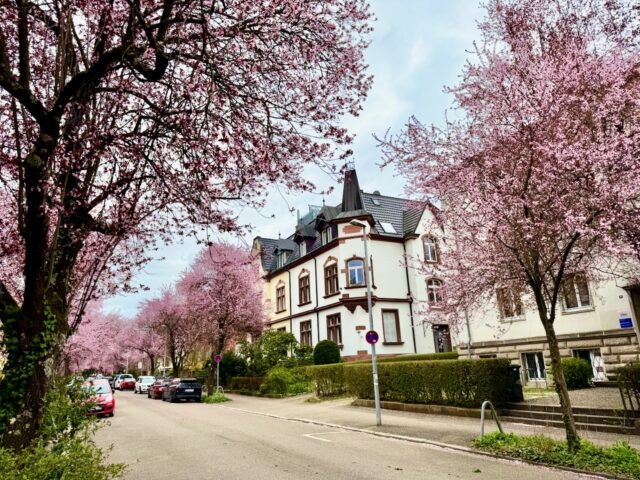
I also hiked up two nearby hills, Schlossberg and Lorettoberg to enjoy the views, and ventured into the leafy Wiehre district, with its beautiful Art Nouveau architecture.
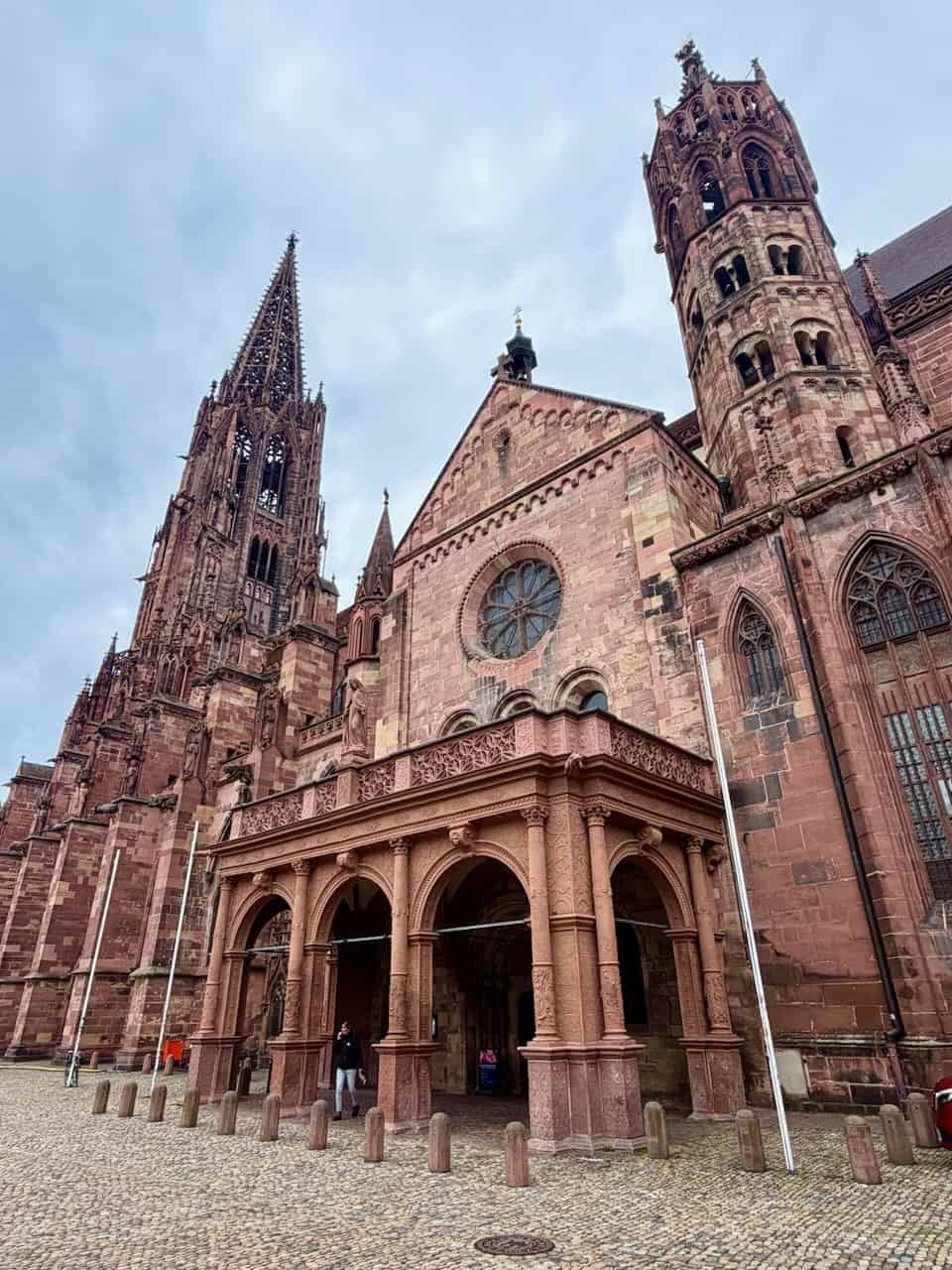
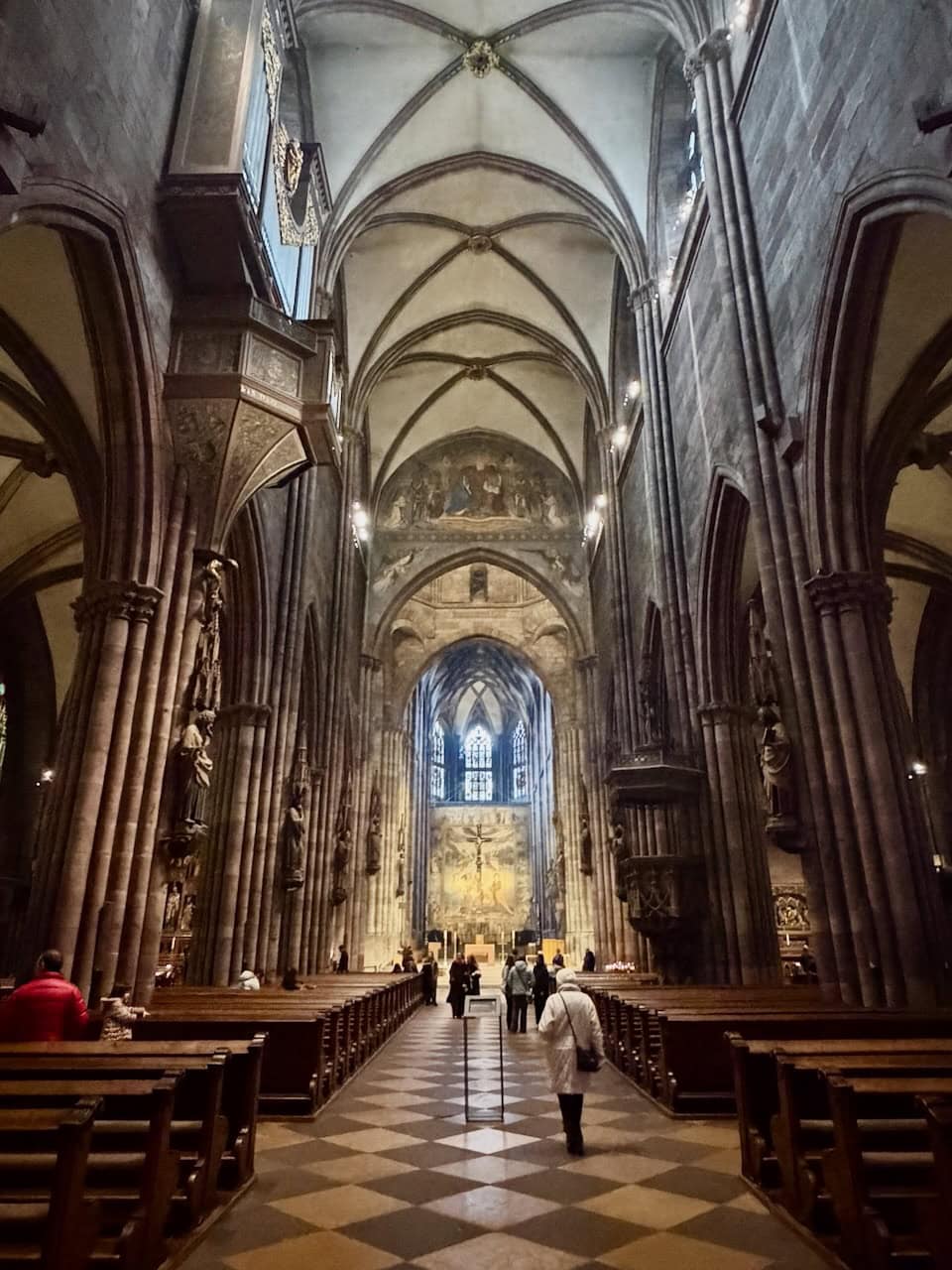
Freiburg Münster
The 13th century Freiburg Münster (Minster) dominates the skyline, its intricate 116m-high Gothic spire rising above the lively Münsterplatz (Cathedral square) where farmers sell seasonal produce, meats, cheeses and flowers (daily except Sundays). It’s possible to climb the Minster tower for sweeping views of rooftops, vineyards and the distant Black Forest hills.
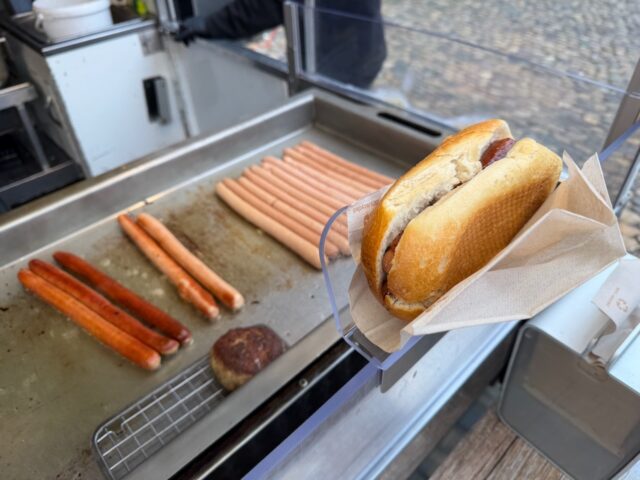
I enjoyed stopping at some of the stalls at the farmers’ market and asking for a tasting of a few cheeses and hams. The market is also the perfect place to have a Freiburger Lange Rote, a local long, red sausage.
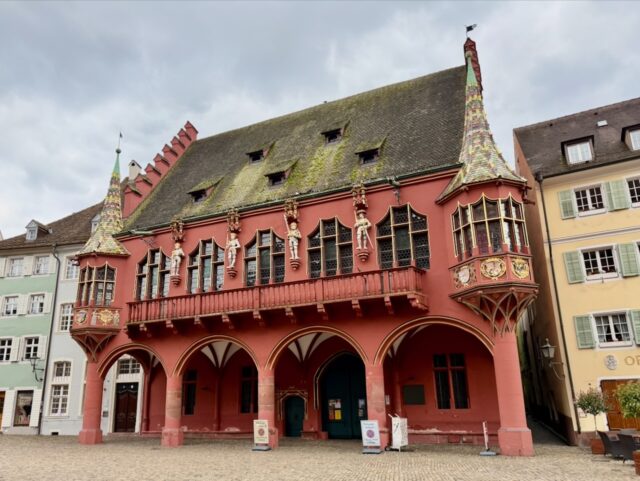
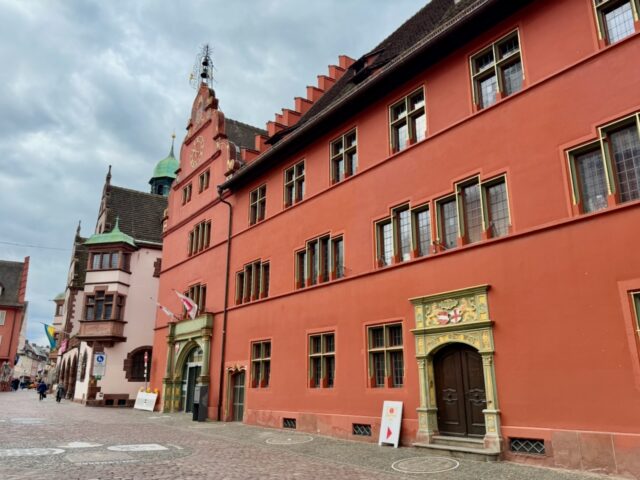
On the southern side of the square stands the 16th century Historiches Kaufhaus, or Historical Merchants’ Hall, one of the city’s most cherished historical monuments.
Alte Wache
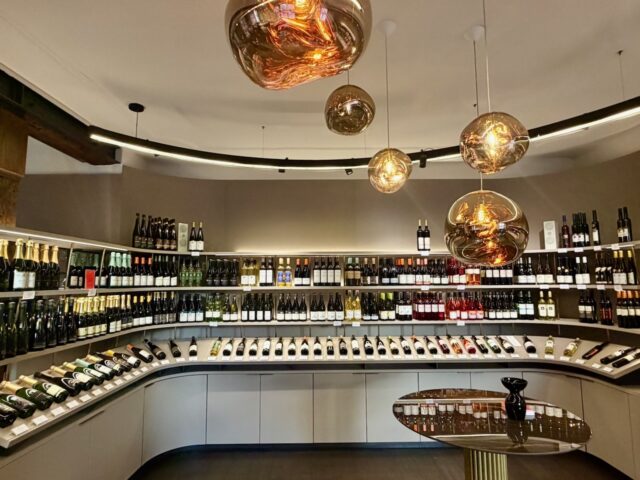
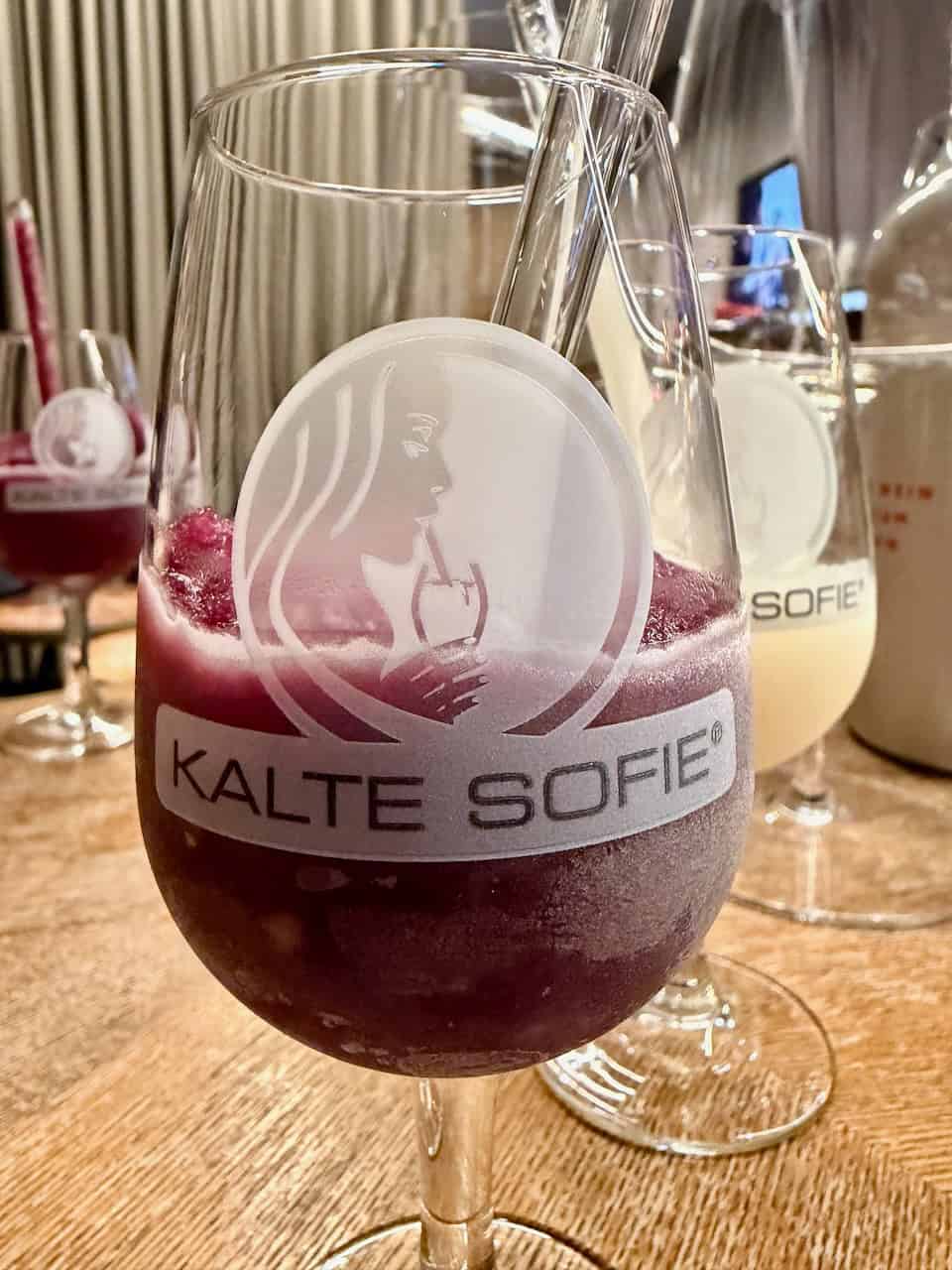
One of my favourite experiences in the old town was the wine-tasting at the Alte Wache. This regional wine store, located opposite the Minster, has a wide range of local wines. In addition to the fabulous wines, two things really blew me away: the amazing cheese biscuits and the insanely delicious Kalte Sofie frozen wine! Trust me, if you’re visiting Freiburg, you have to try them!
Rathausplatz
Another of the city’s most important squares, Rathausplatz is home to the Old and New Town Halls. The 16th century Old Town Hall (Altes Rathaus), with its striking red façade, now houses the Tourist Office. It’s not the oldest town gall in the city. The first town hall, Gerichtslaube (1303), can be found in Turmstrasse, just behind the New Town Hall.
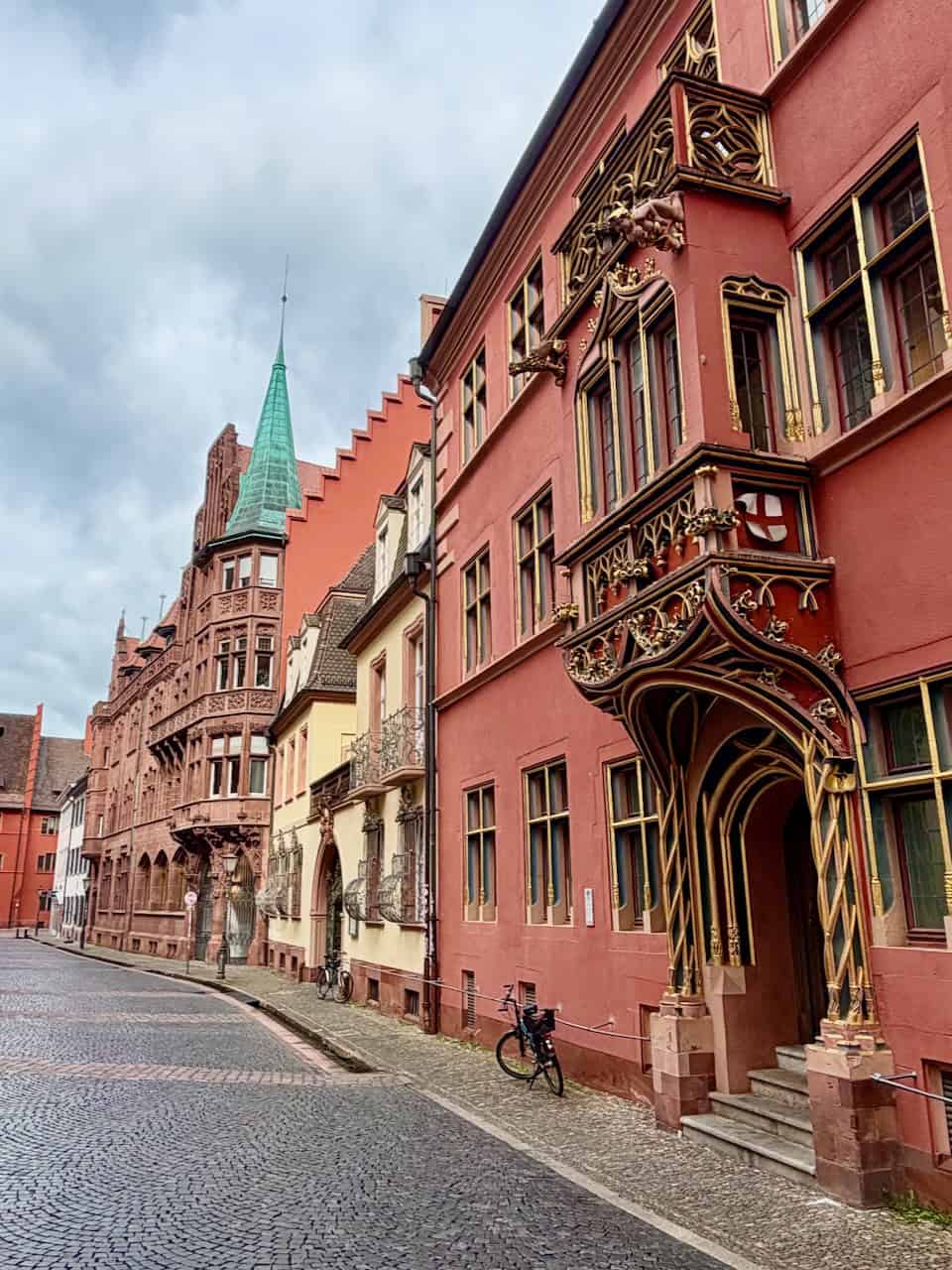
Haus zum Walfisch
Around the corner from the Rathausplatz, in the Franziskanerstrasse, you’ll find the beautiful, late-Gothic Haus zum Walfisch. This ornate house is famous as the place where the humanist, Erasmus, stayed in the 16th century.
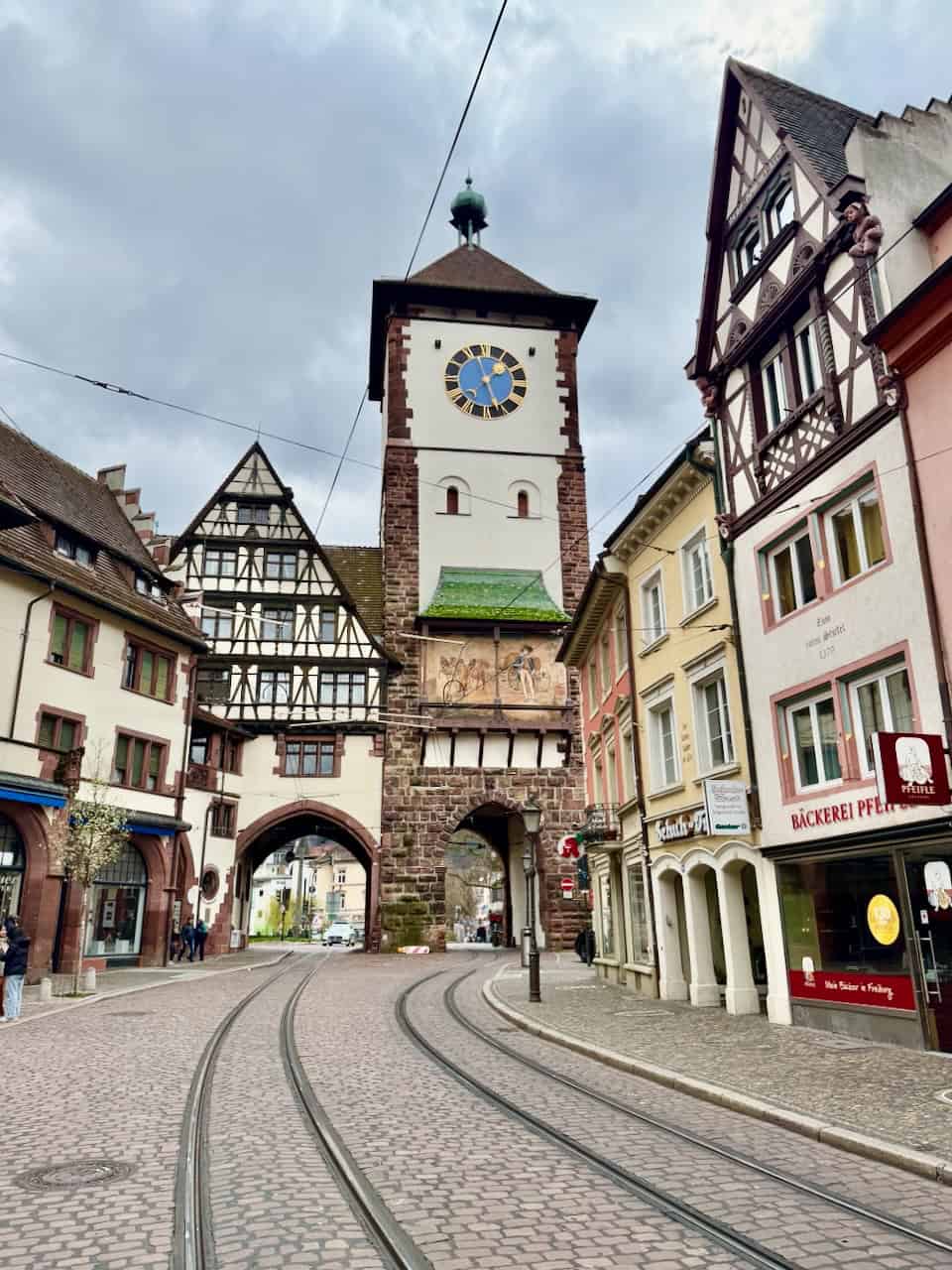
Medieval city gates
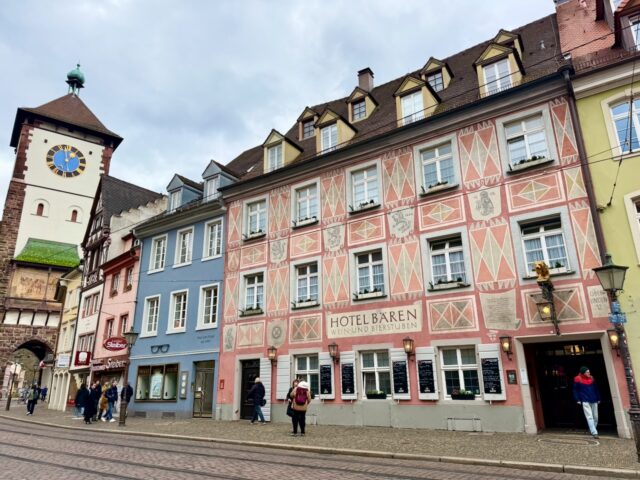
There are two surviving city gates from the 13th century: Schwabentor and Martinstor. Schwabentor is particularly interesting as a painting on its façade depicts the story of a Swabian merchant who tried to buy the city with barrels full of ‘money’, and failed miserably.
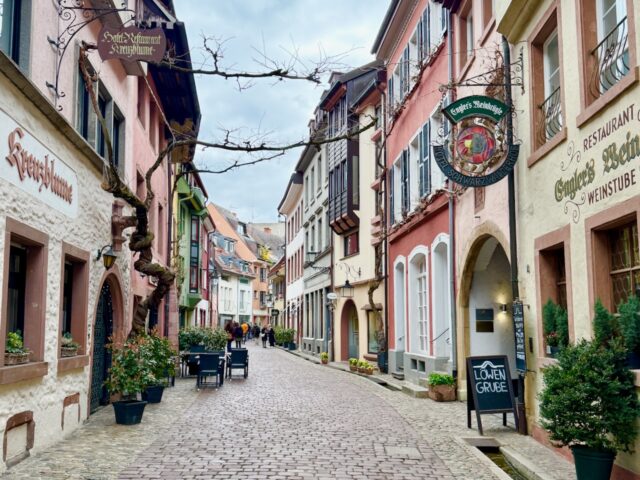
Nearby the Schwabentor is one of the town’s prettiest streets: Konviktstrasse (an artisans street in the Middle Ages).
A stone’s throw from the Schwabentor, you’ll also find Gasthaus Zum Roten Bären. In existence since 1120, this is Germany’s oldest inn.
Martinstor is the city’s oldest gate. Built for defensive purposes in the 13th century, the gate was also used as a prison. In the 20th century, its height was raised to accommodate for buses and trams passing beneath it.
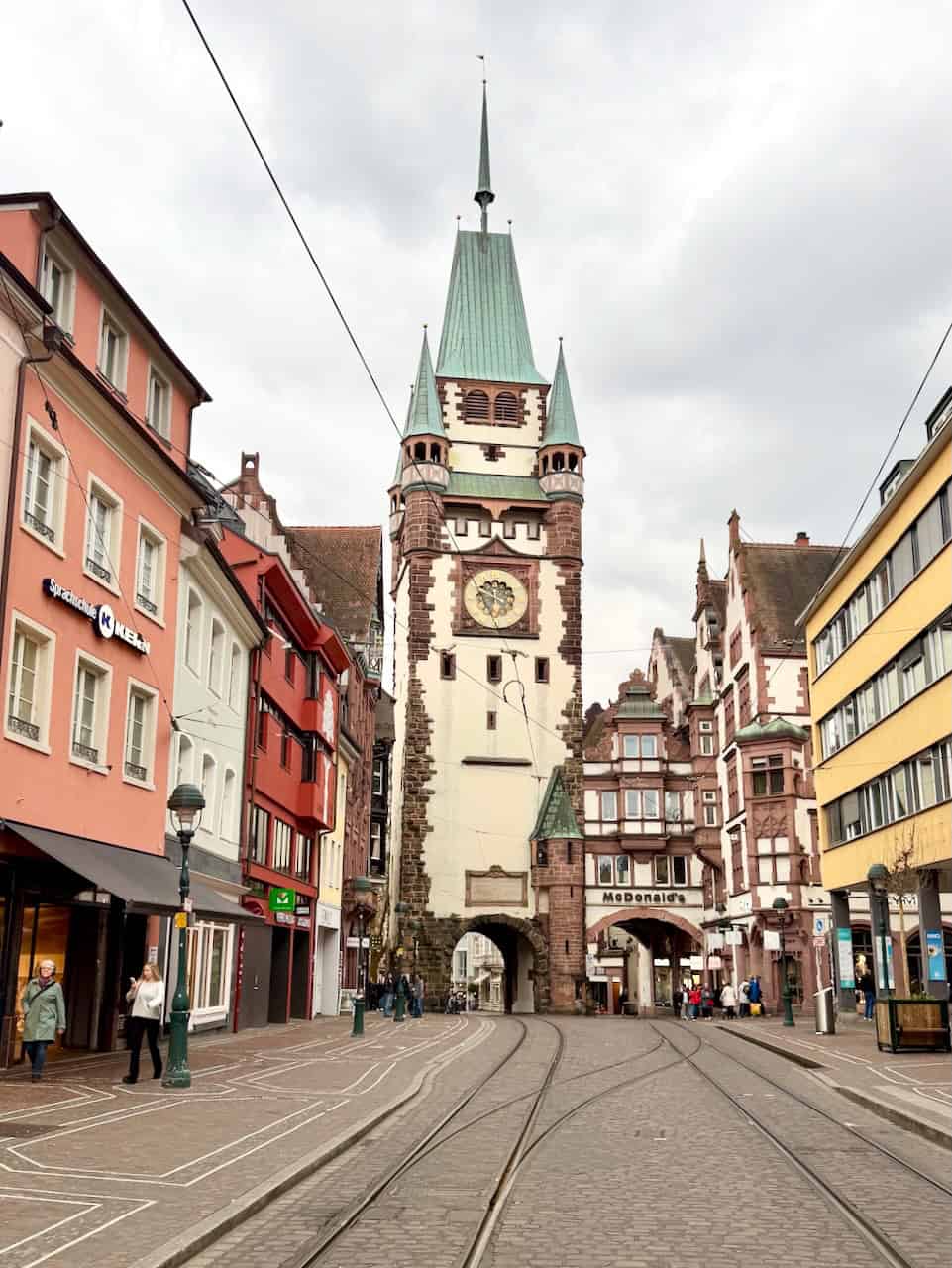
In the vicinity of the Martinstor are two delightful foodie destinations: the Markthalle, a food hall with a wide variety of cuisines; and Gmeiner, one of the city’s most famous cake shops, and the perfect place to eat a Black Forest cake.
Augustiner Museum
Fronting the Augustinerplatz, a popular gathering place for the city’s students, the Augustiner Museum is housed in the former monastery of the Augustinian Hermits. The museum has an extensive collection of art and cultural artifacts, ranging from the Middle Ages to the Baroque period.
Schneckenvorstadt
Located roughly between the Schwabentor and Martinstor and following the path of the Gewerbekanal (a fast-flowing channel), Gerberau, Fischerau and Insel form the Schneckenvorstadt (‘Snail Suburb’), or the medieval commercial quarter. This is the best preserved medieval part of the old town where tanners, stone cutters and butchers lived and worked.
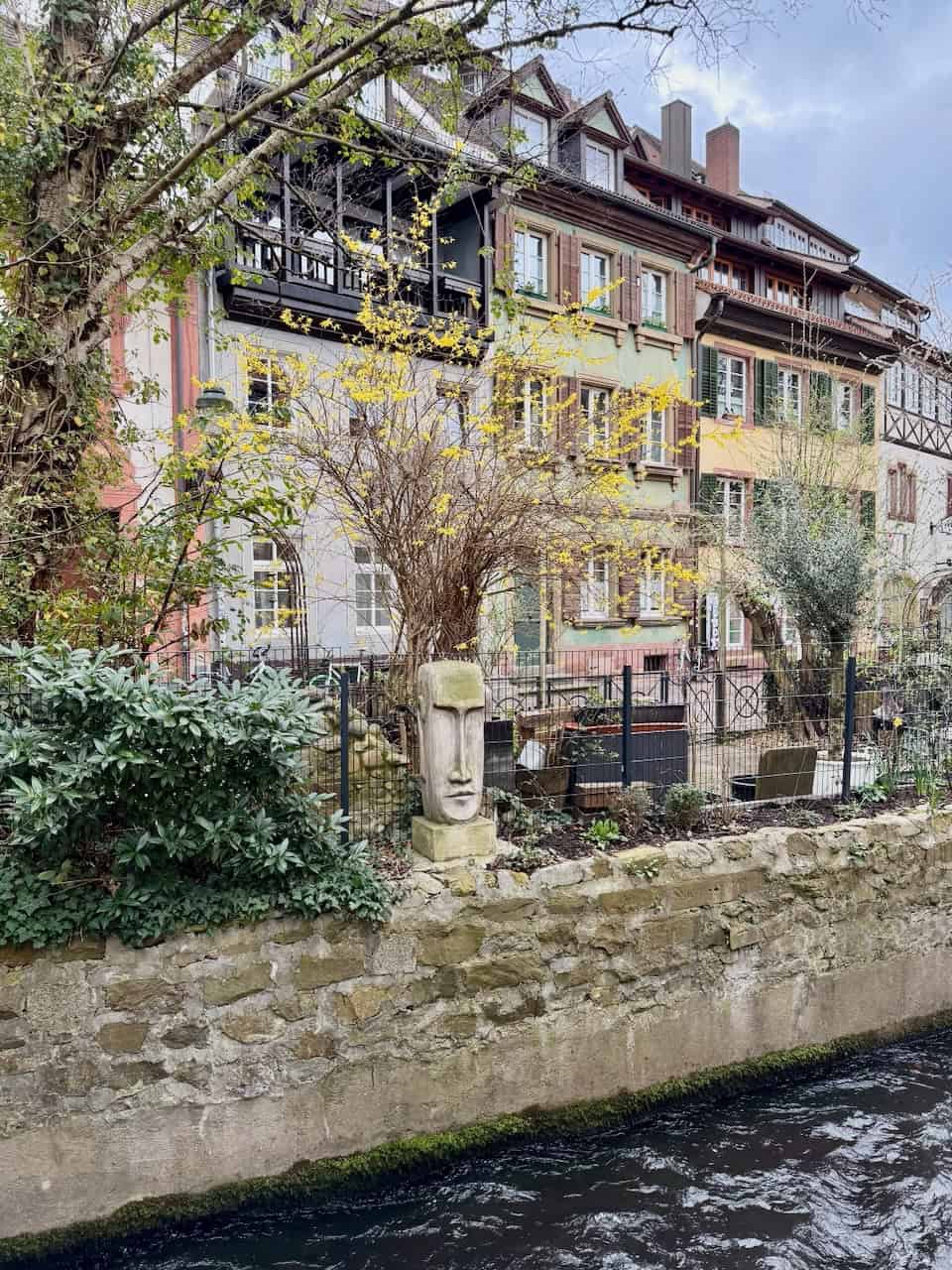
These days, it’s a charming area to explore, with its beautifully-preserved medieval houses, gushing water, little bridges, artisanal shops and eateries.
Schlossberg
Just a few steps from the old town, Schlossberg (Castle Hill – though only the ruins of a former castle can be seen today) is a favourite among locals who come here to enjoy nature hikes and the panoramic views of Freiburg. Kanonenplatz is a viewpoint that’s easy to reach – the path uphill starts at the Schwabentor. There’s also a biergarten where you can have some snacks and a beer while enjoying the views.
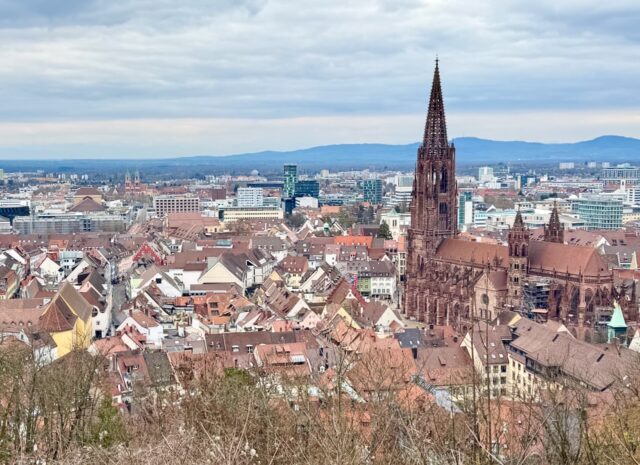
An alternative method to ascend Schlossberg is with the Schlossbergbahn, a funicular railway that functions like an elevator.
Wiehre district
Across the Dreisam river from the old town lies the Wiehre district. I enjoyed the hike up to Lorettoberg, where I stopped at the Schloss Café (a restaurant with a terrace in a beautiful Art Nouveau castle).
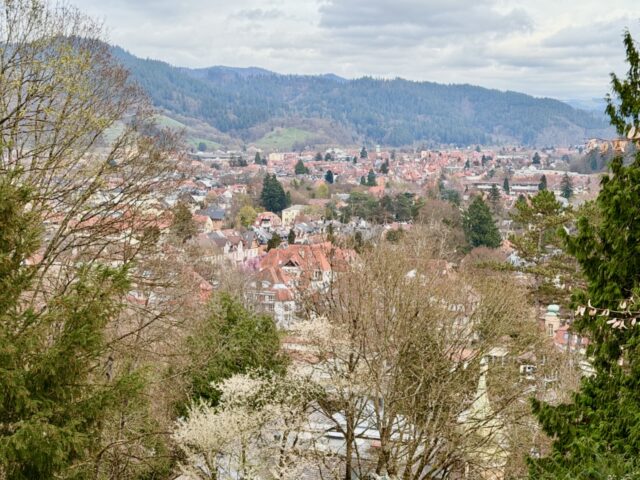
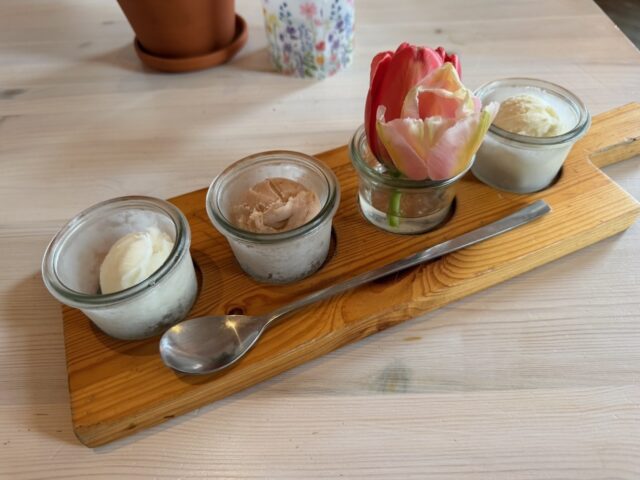
From there, I made my way down the hill to the Wiehre district, with its tree-lined streets and gorgeous Art Nouveau architecture. One place I recommend for a coffee and cake or ice-cream is Förster Max (location). The pastries, cakes and ice-creams are seriously good!
Where to stay in Freiburg
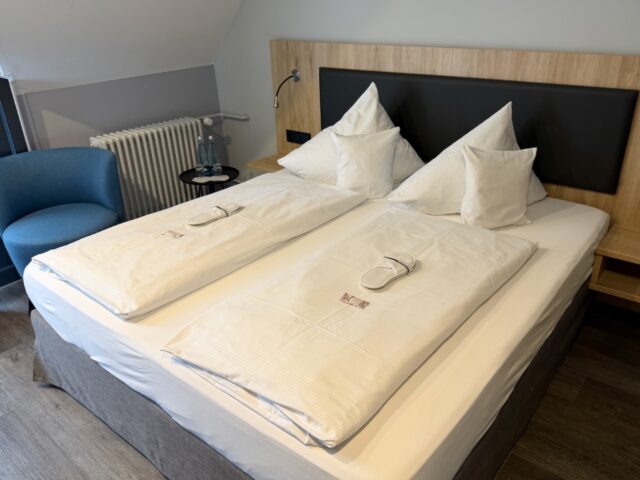
I stayed at the lovely Gasthaus Zum Roten Bären, known as the oldest inn in Germany (since 1120!). The inn has a very central location in the old town and is a ±15 minute walk from the train station. Search for accommodations in Freiburg (Booking.com).
Where to eat in Freiburg
There are also lots of restaurants that specialise in the regional Baden cuisine (expect fresh farm-to-table food), numerous breweries and wine bars that serve wines from nearby vineyards. Markthalle, Gasthaus zum Rauhen Mann, Hausbrauerei Feierling and Lichtblick restaurant are eateries I can recommend.
Tübingen
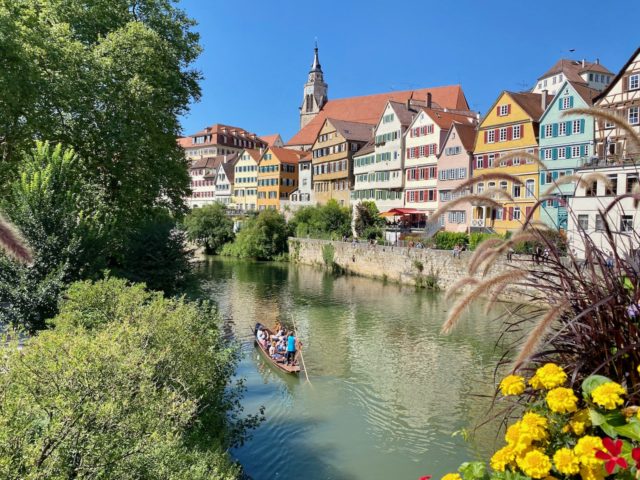
Tübingen, a town on the shores of the Neckar River, feels like a page from a medieval storybook. One of the few completely intact Altstädte (old towns) in Germany – having survived WWII unscathed – it has a remarkably preserved maze of cobbled lanes, half-timbered houses and canal-lined streets. The old town of Tübingen is a joy to explore and to photograph.
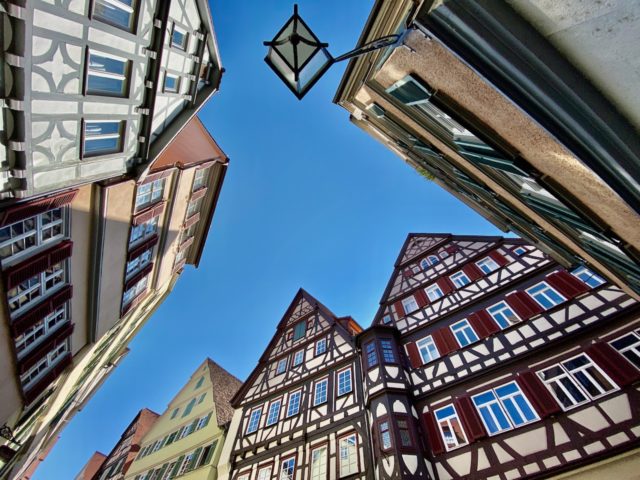
Tübingen (map) also has one of the oldest universities in Europe, with students comprising about one-third of the total population. This gives it an undeniably youthful, intellectual buzz.
Highlights of Tübingen
The best things to do in Tübingen are to simply roam its charming streets and immerse yourself in its medieval atmosphere. Start at the Neckar River, where you can enjoy a river punting cruise in the summer, and make your way up to the old town.
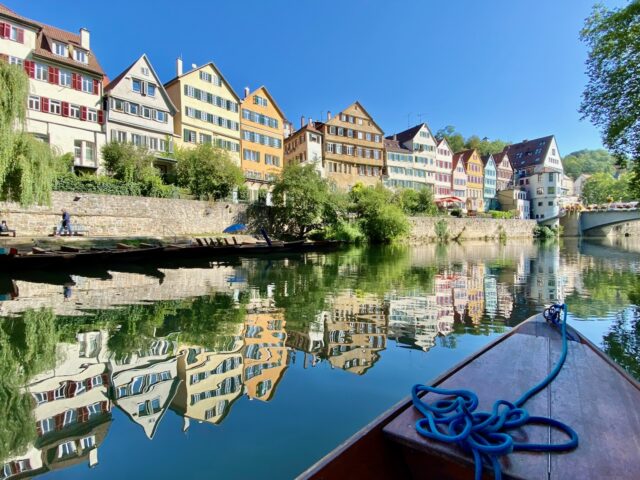
Neckarfront
The Eberhardsbrücke (bridge) crosses the Neckar River and is the main thoroughfare from the train station to the old town. From the bridge, there’s a wonderful view of the gorgeous Neckarfront, a row of colourful houses overlooking the river.
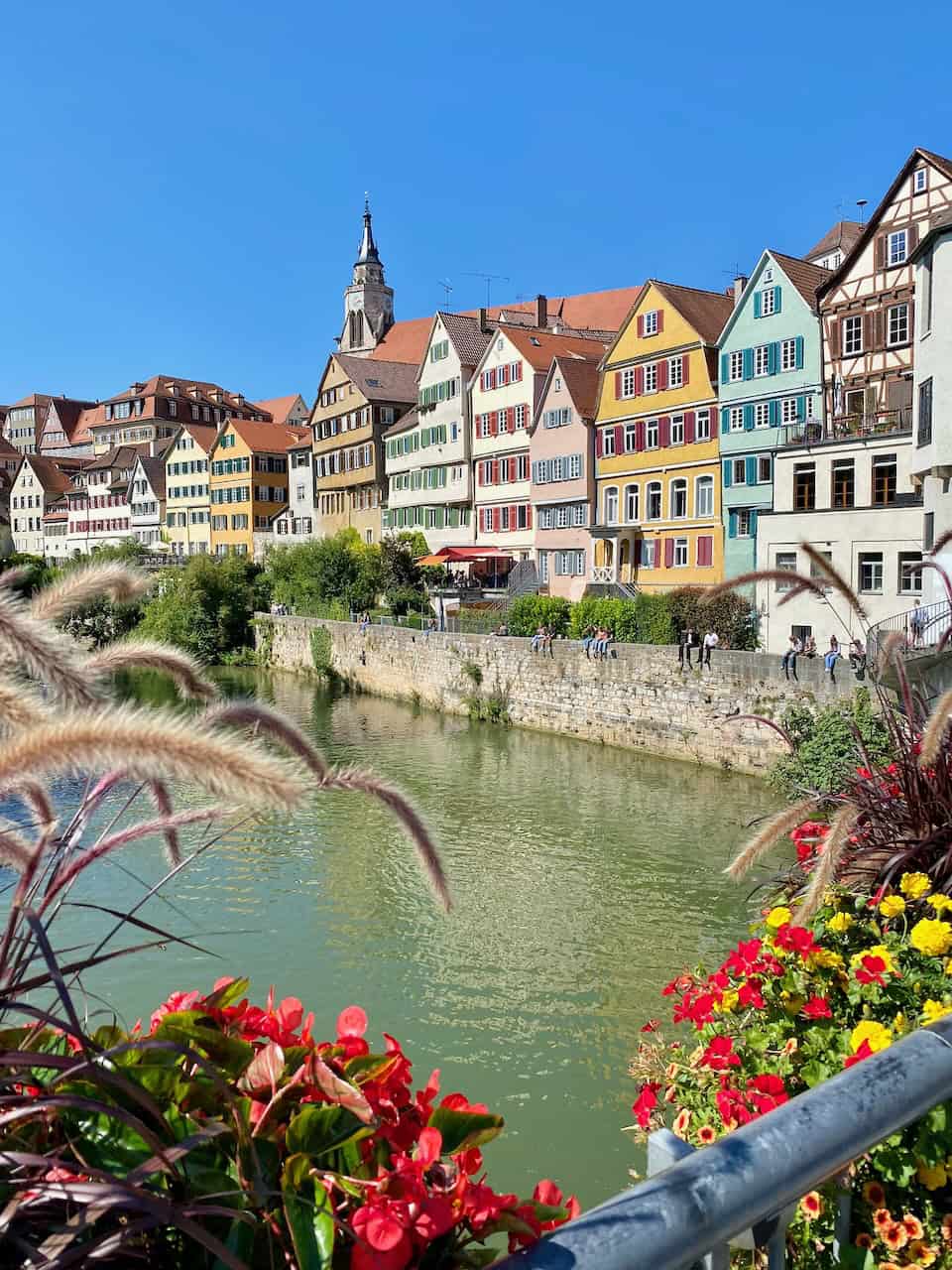
Holzmarkt
In the heart of the old town, overlooking Holzmarkt, is the 15th century Stiftskirche St. Georg (Collegiate Church of St. George). It’s possible to climb the tower for panoramic views of the town’s red rooftops.
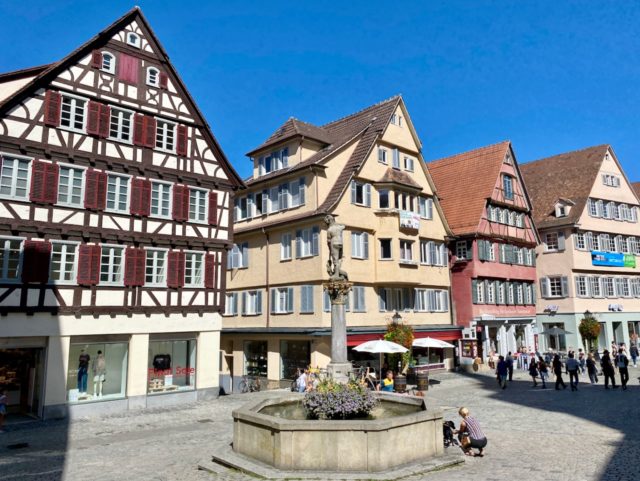
Marktplatz and Rathaus
A short stroll away lies Marktplatz, the town’s bustling market square. Overlooking the square, the town’s Rathaus (old town hall), with its ornate façade, vies for attention with the beautiful Neptune fountain. The square is the venue of the popular farmers’ market every Monday, Wednesday, and Friday morning (7am – 1pm).
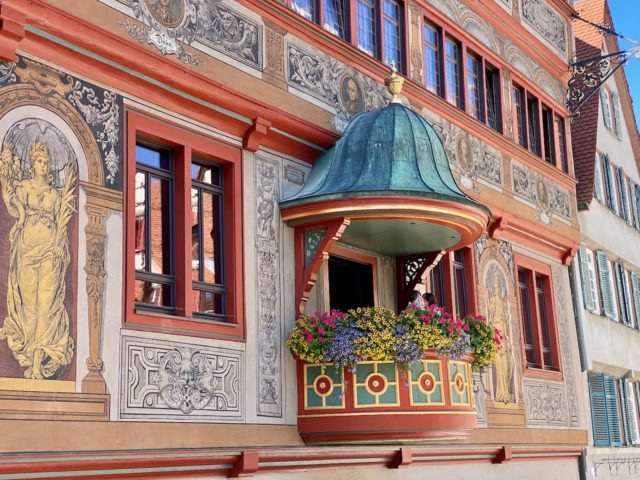
Medieval streets
It’s a delight to explore the old town’s streets and lanes. Some of my favourites include Haaggasse, Ammergasse, Münzgasse, Marktgasse and Kornhausstrasse. Make sure to explore the little lanes and narrow staircases that connect the main streets in this hilly town.
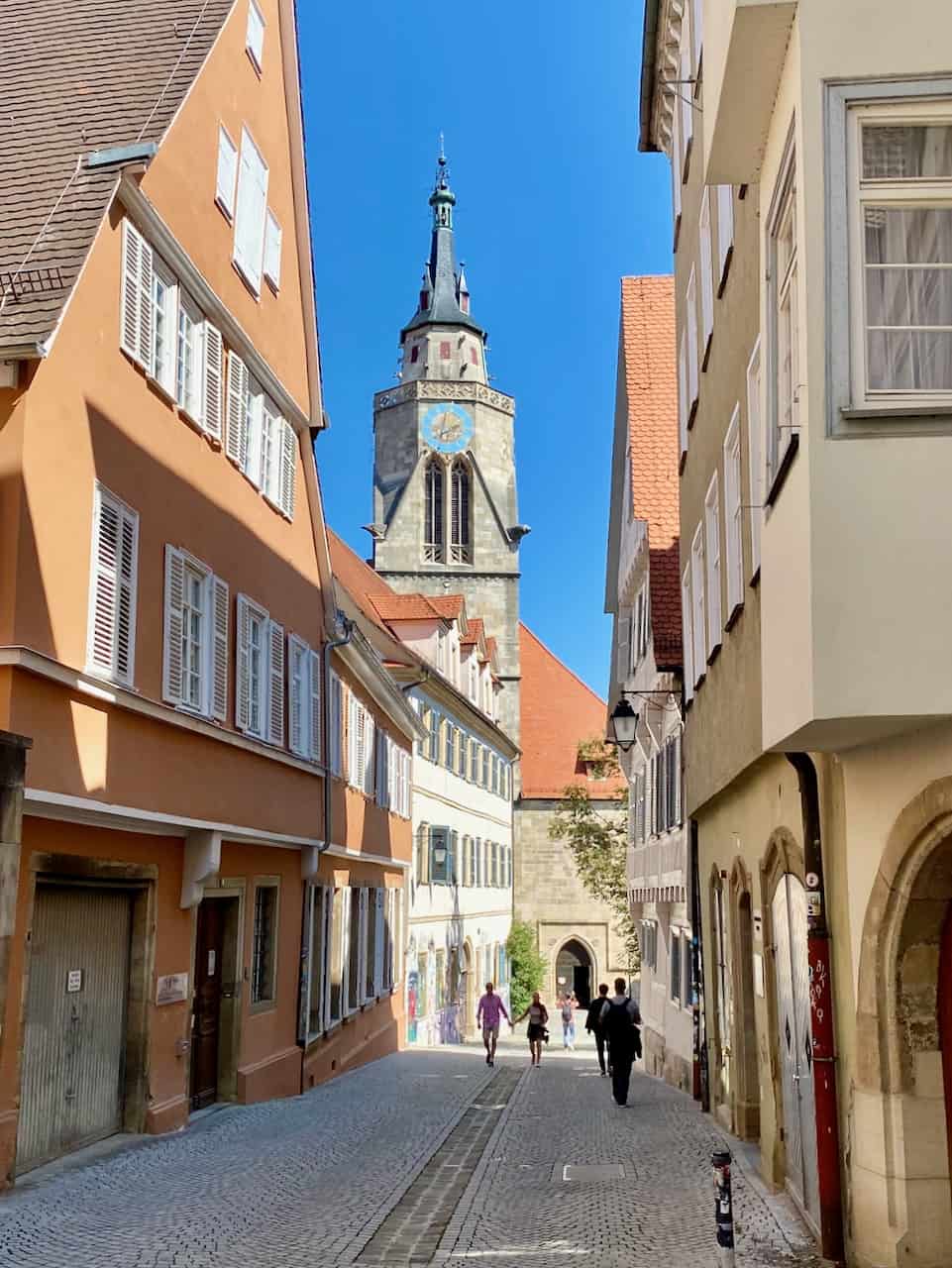
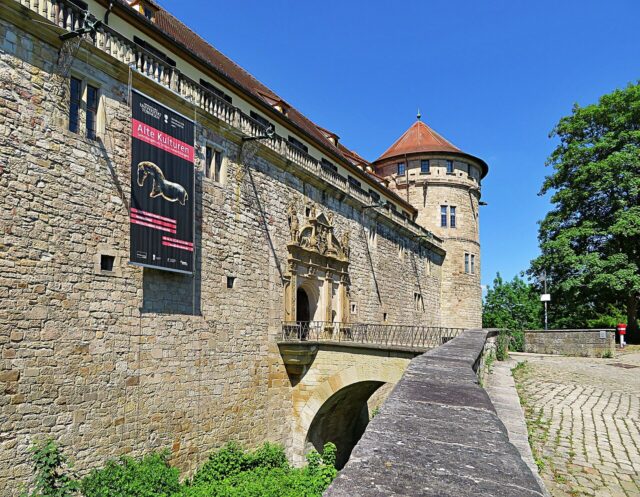
Hohentübingen Castle
High up on the hill, overlooking the old town, sits the 11th century Hohentübingen Castle. Formerly the residence of the Lords of Tübingen, and later the Dukes of Württemberg, the castle now houses the Institute of Classical Archaeology and its Museum of Ancient Cultures. It’s also a great spot for panoramic views of the old town.
Other attractions in Tübingen include the Neckarinsel (island in the Neckar river), with its avenue of plane trees; the Botanical Gardens and the Bebenhausen Monastery (15 minutes outside the town).
Where to stay in Tübingen
There are numerous accommodation options in and around the old town. I recommend the lovely Hotel Am Schloss, near the castle; or Hotel Krone Tübingen, located between the train station and the old town. Search for accommodations in Tübingen (Booking.com).
Where to eat in Tübingen
Being a university town, there is a broad range of eateries for different budgets. I recommend trying the local Swabian cuisine at Mauganeschtle or Gasthaus Bären.
Augsburg
It was my first time in Augsburg (map) and I was impressed. Divided between an upper and a lower town, the city combines broad avenues, expansive squares, elaborate fountains, and elegant buildings in the upper town, with charming alleys, gushing water channels and tranquil gardens in the lower town.
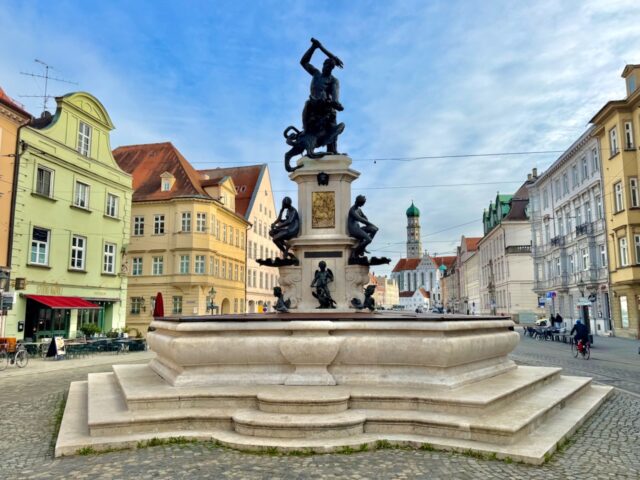
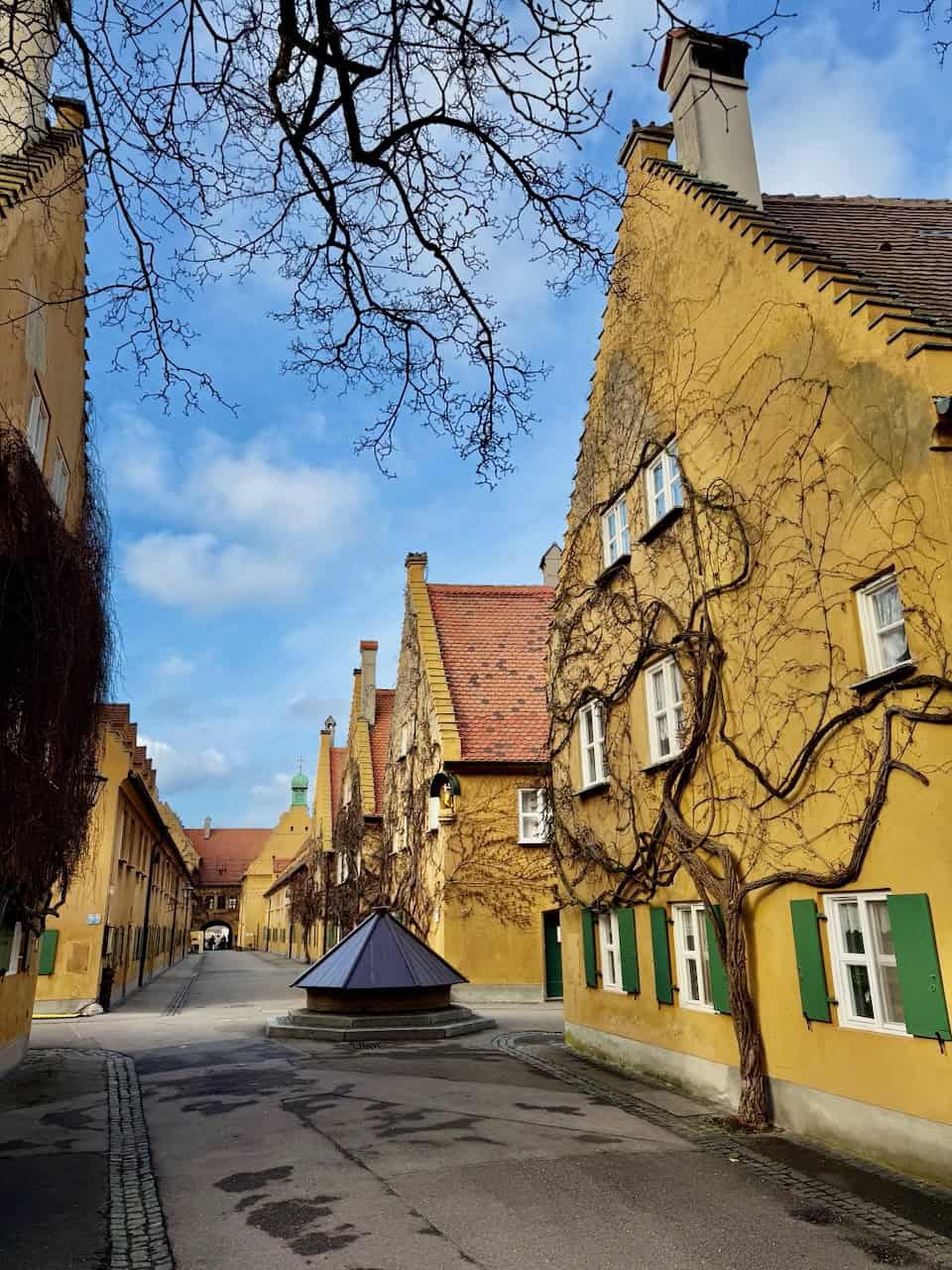
Founded by the Romans over 2,000 years ago, Augsburg flourished during the Renaissance as a centre of banking and trade, thanks largely to the powerful Fugger family. Their legacy lives on in the Fuggerei – the world’s oldest social housing complex still in use – where residents pay a symbolic annual rent.
Highlights of Augsburg
I thoroughly enjoyed wandering the streets of the upper and lower towns, visiting numerous churches and palaces, browsing the Stadtmarkt (city market), and learning about the city’s UNESCO World heritage listed water management infrastructure.
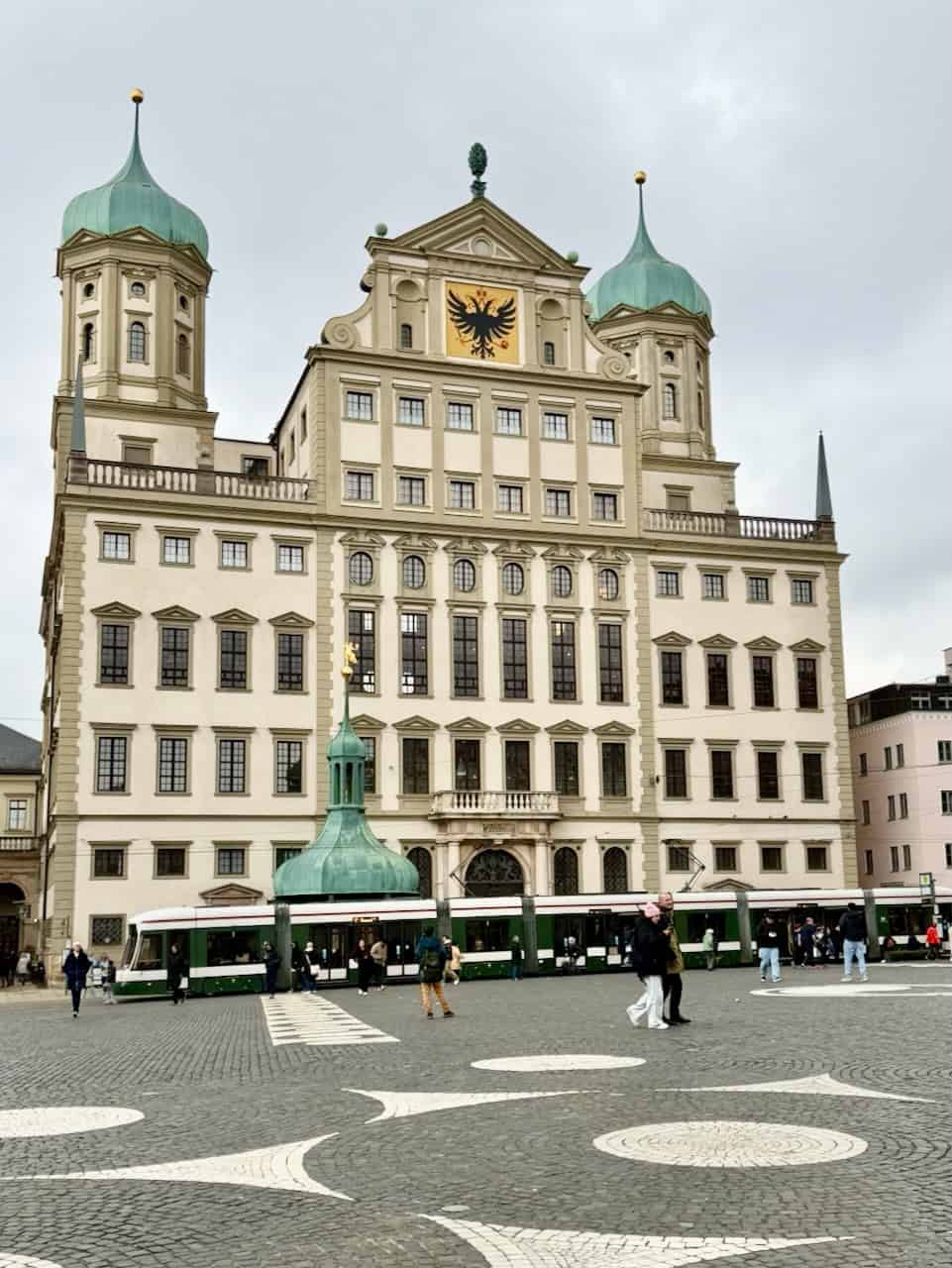
Rathaus
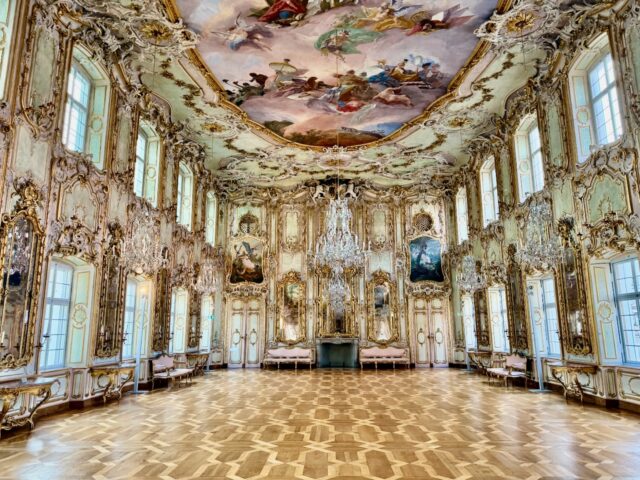
In the upper town, the Rathaus (Town Hall) impresses with its lavish Golden Hall, a masterpiece of Renaissance architecture adorned with intricate ceilings and gilded details.
Maximillianstrasse
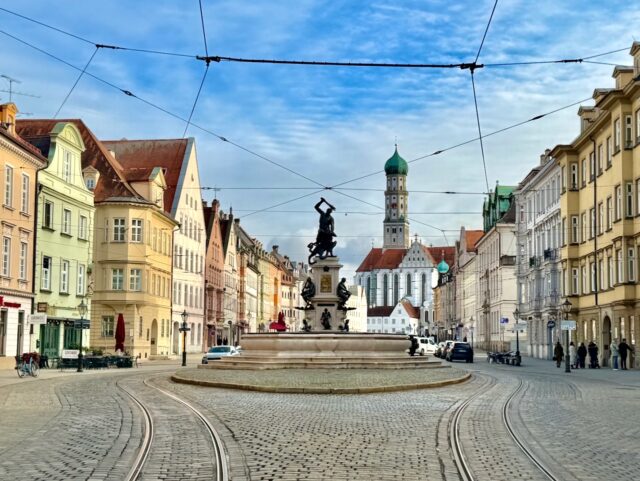
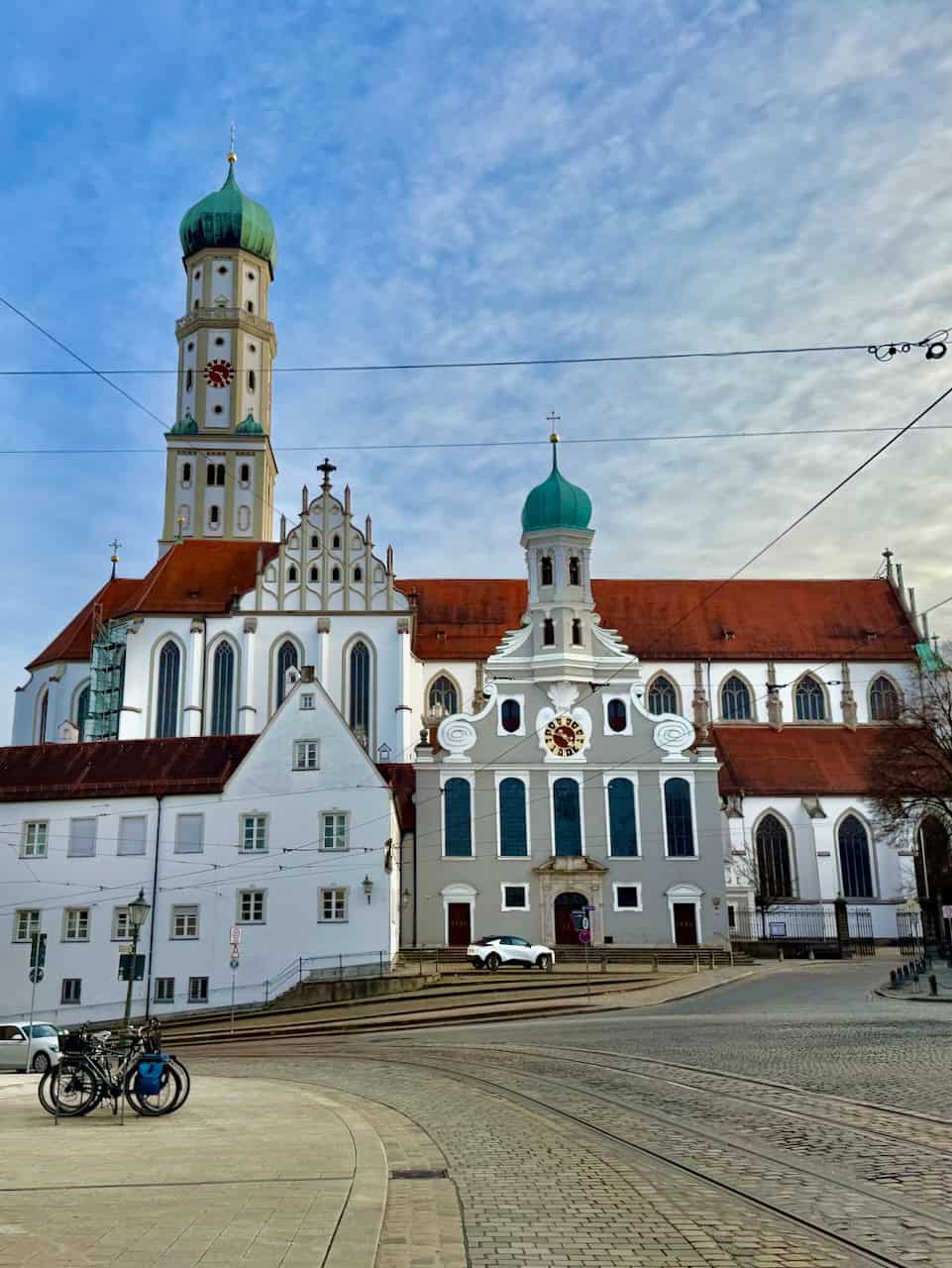
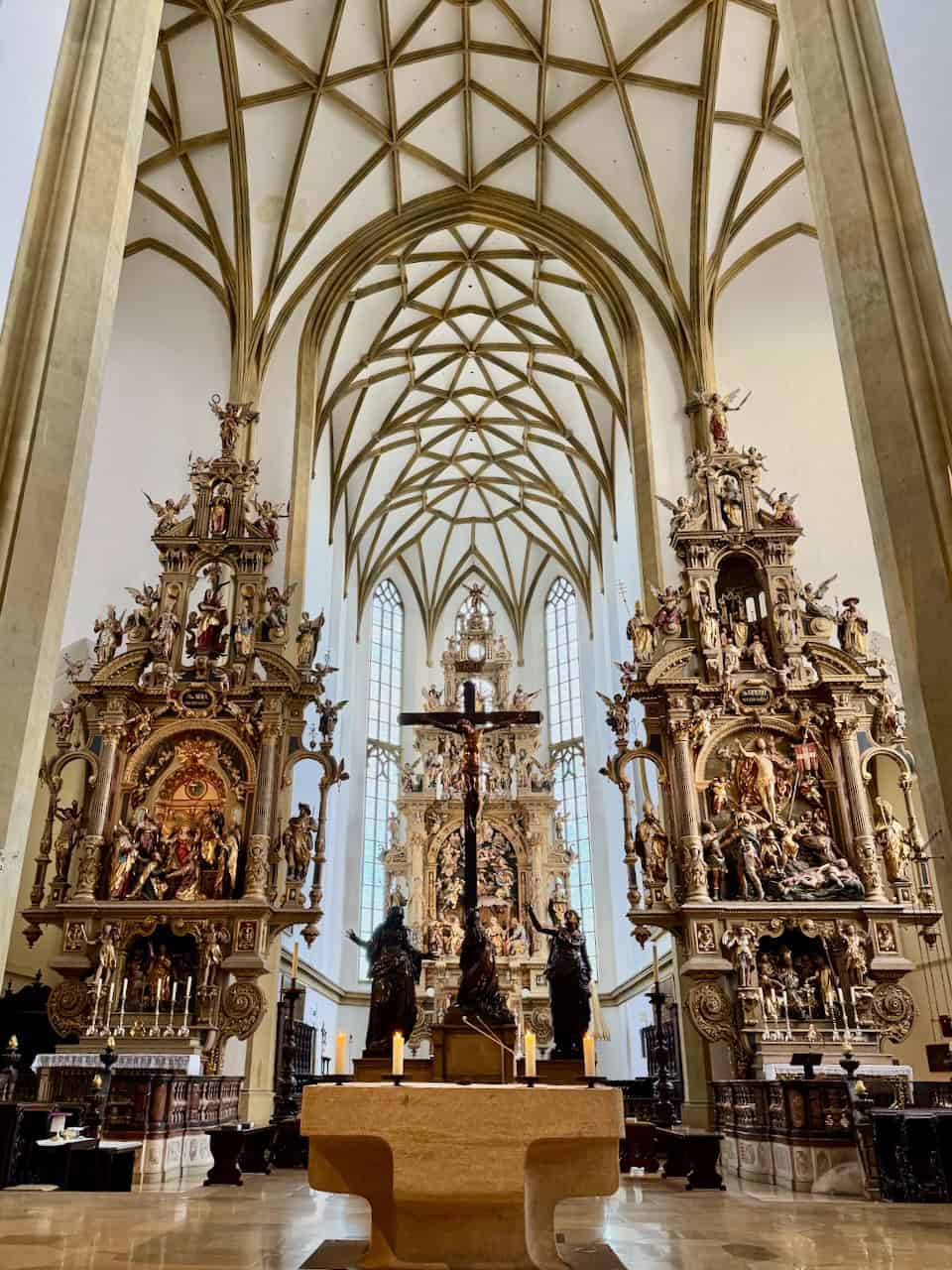
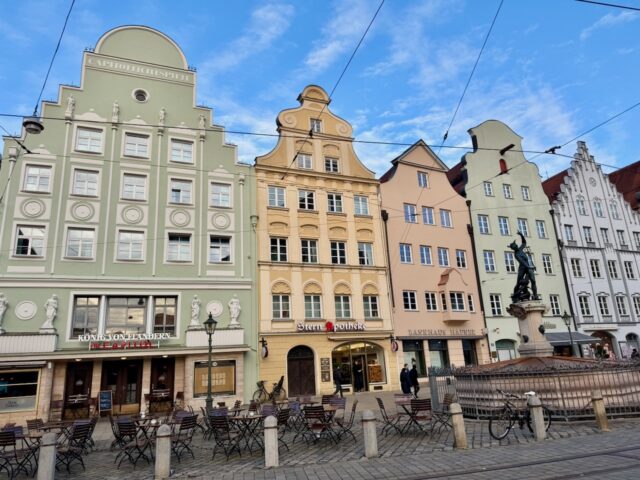
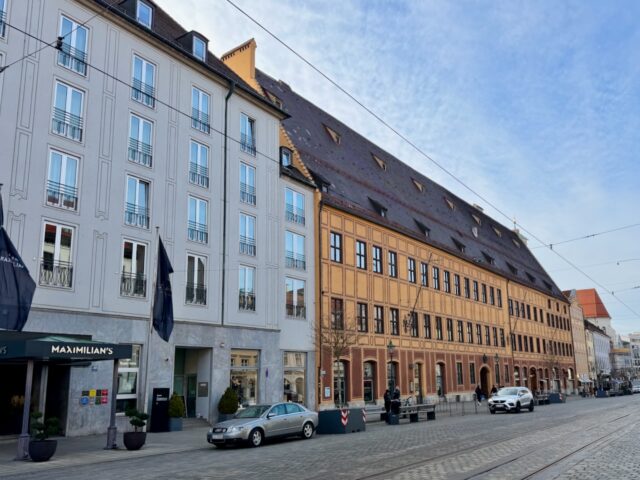
Strolling along Maximilianstrasse, lined with fountains and grand buildings, offers a glimpse into Augsburg’s opulent past. Stretching from the impressive Basilica of St. Ulrich and Afra to the Rathausplatz, this elegant boulevard is home to various historic monuments such as the Schaezlerpalais, Fuggerhaus, Hercules fountain and colourful Weberhaus.
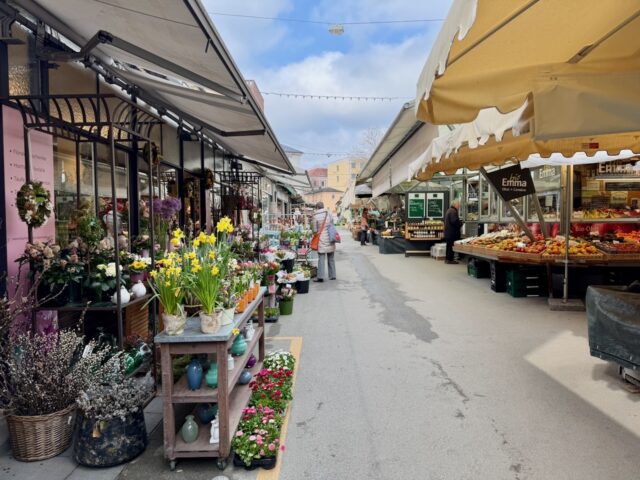
Stadtmarkt
The colourful Stadtmarkt (City Market) comprises a mix of open-air stalls and indoor spaces. I enjoyed browsing the stalls and having a coffee at one of the alfresco cafés.
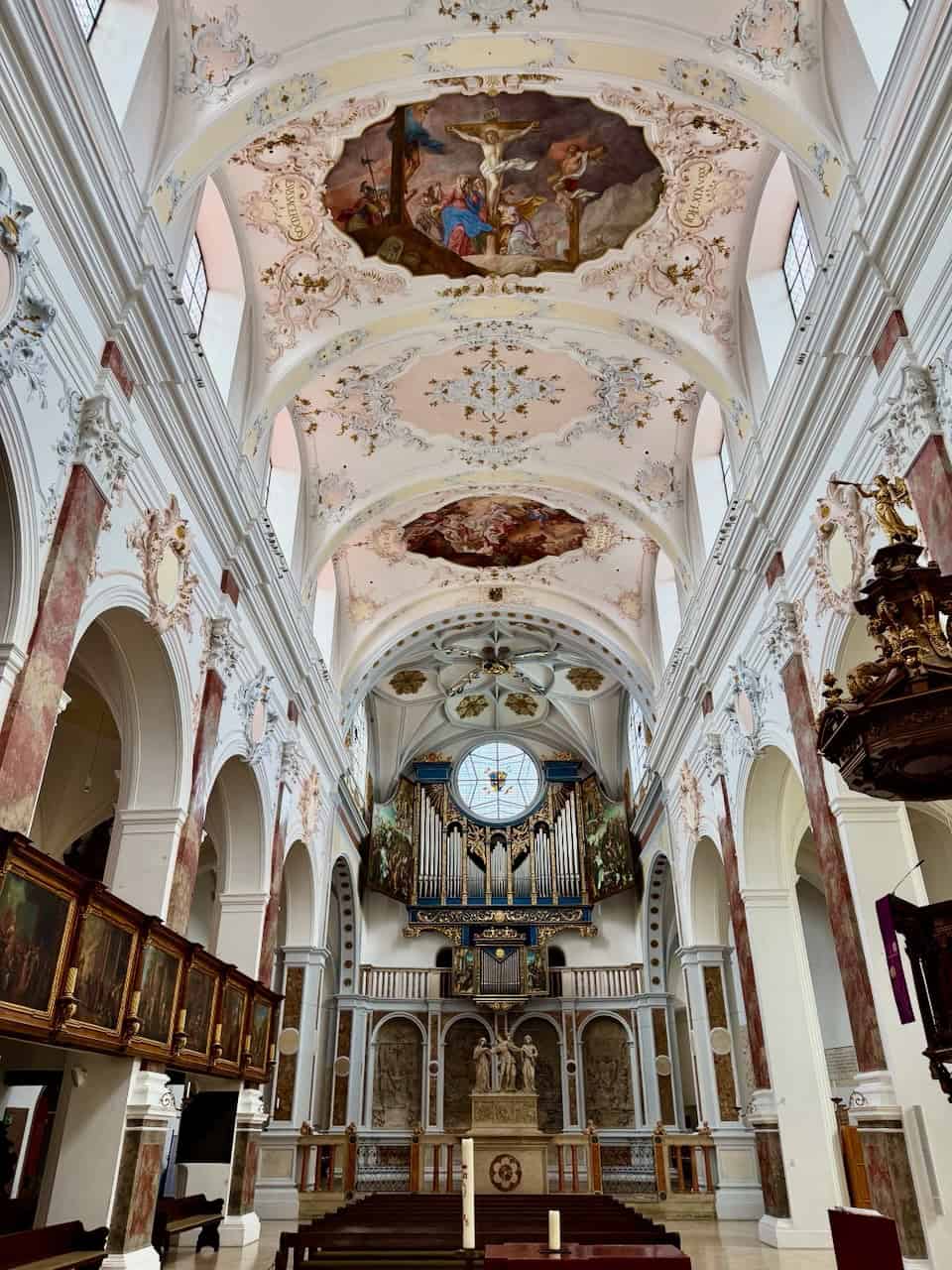
St. Anne’s Church
Originally built as the church of the Carmelite Priory in the 14th century, St. Anne’s Church was later transformed into a Protestant church, with a Catholic chapel dedicated to the Fugger family. The gothic frescoes in the Goldsmiths’ chapel, and the church nave, with its ornate baroque and rococo influences, are absolutely beautiful.
Lechviertel
In the Lechviertel district, in the lower town, small canals weave through charming streets, creating a peaceful atmosphere that feels worlds away from the grandeur of the historic landmarks in the upper town.
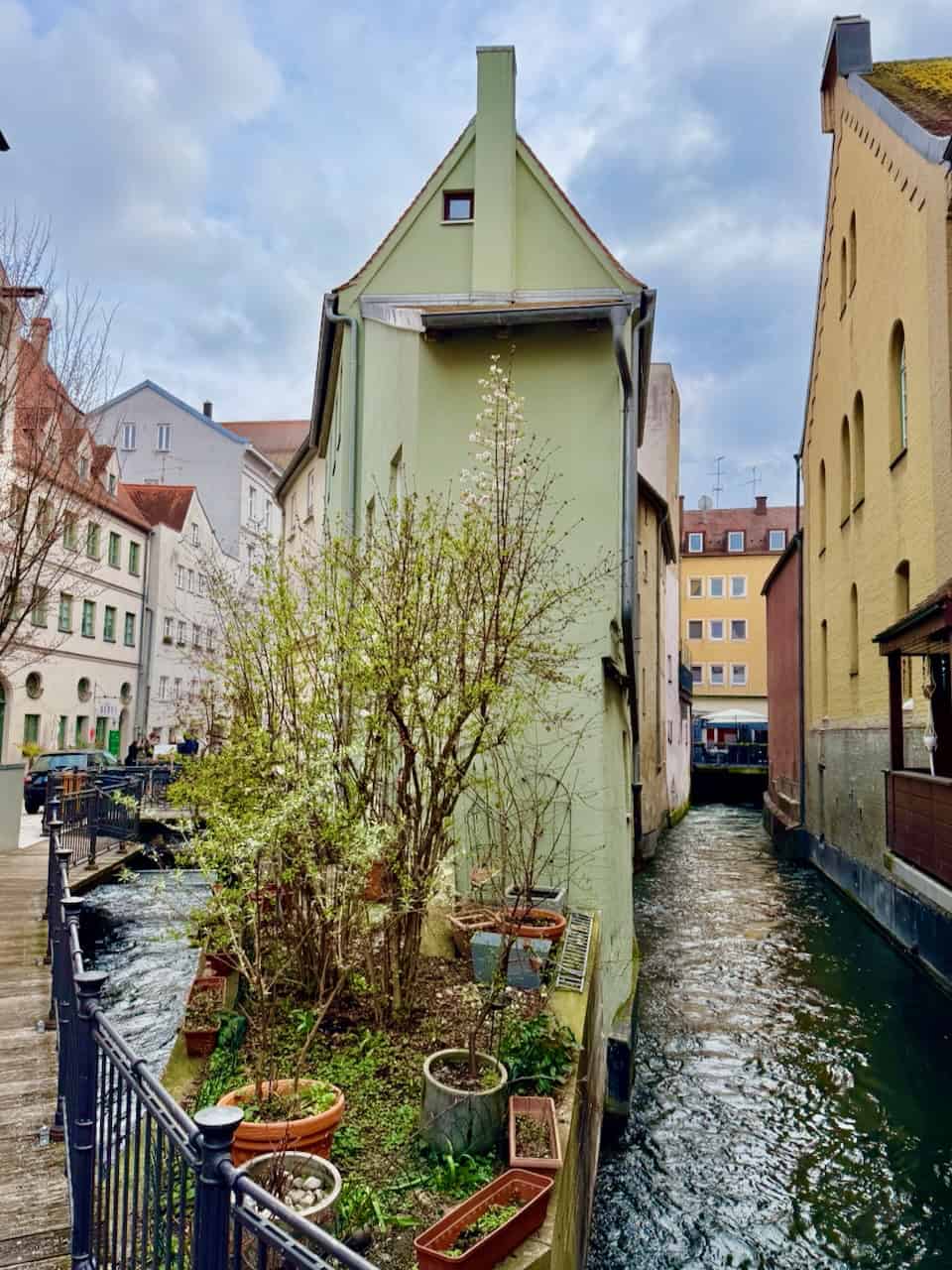
This water management system – a network of channels and water towers – were built in the 15th to 17th centuries to supply the town’s tanners and butchers with fresh water, and to power the mills. I was amazed to learn that these water channels nowadays generate hydroelectric power for homes in the city!
Fuggerei
The historic Fuggerei is the world’s oldest social housing complex that’s still in use since the 16th century. Residents pay a symbolic amount (about €1 per year!) in exchange for saying their prayers three times a day.
Where to stay in Augsburg
The grandest hotel in Ausgburg is undoubtedly Hotel Maximilian’s, an iconic institution in the city centre. Another hotel I can recommend is City Hotel Ost am Kö, situated on the edge of the historic centre and just a 10-minute walk to the train station. Search for accommodations in Augsburg.
Where to eat in Augsburg
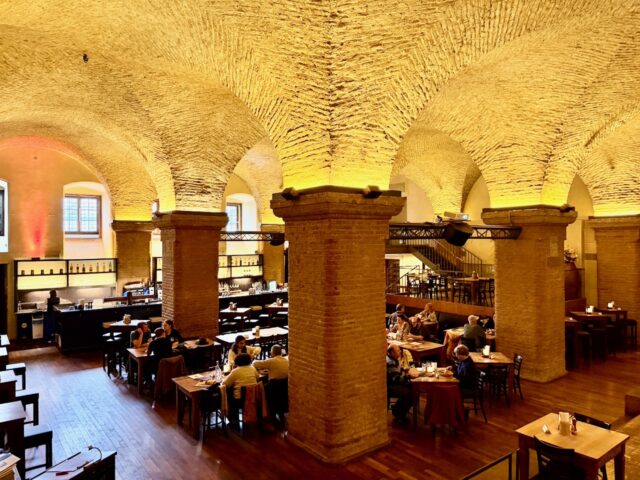
I loved the experience of dining in the huge vaulted space of the Ratskeller. Serving typical German fare, the Ratskeller is an institution in the city and is located beneath the Ratshaus.
Another restaurant I can recommend is the Riegele Wirtshaus. Situated near the train station, this brewery/restaurant serves excellent beer and delicious local cuisine.
Regensburg
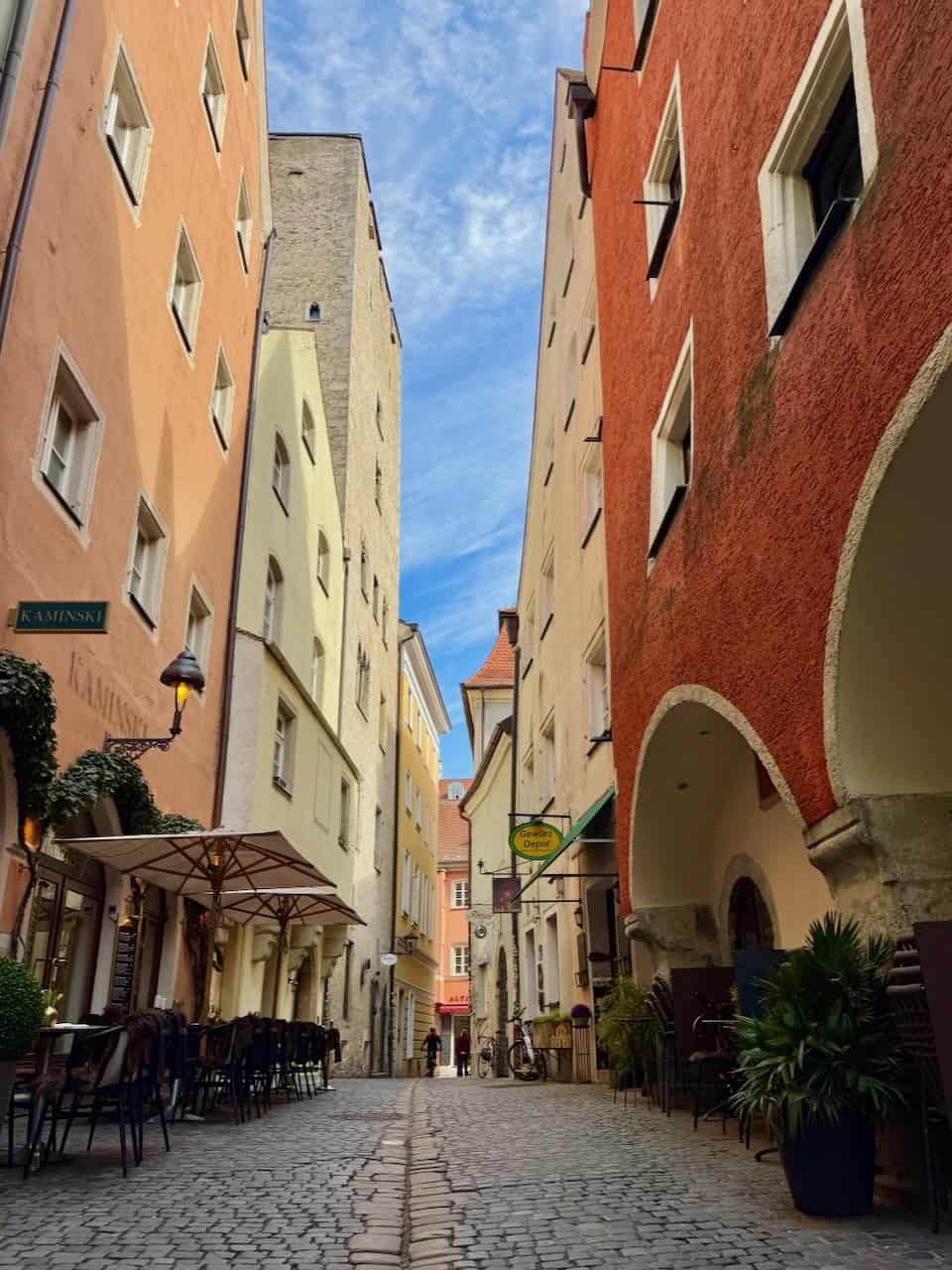
The next stop on my southern Germany rail tour was Regensburg (map). This historic city on the banks of the Danube River can trace its history back to Roman times. In the Middle Ages, it grew into a wealthy merchant town. The rich built elaborate houses (or ‘city castles’) with impressive towers, taller even than the Cathedral at the time. During WWII, much of the old town was unscathed and is now a UNESCO World Heritage site. It’s a lively university city with absolutely charming streets, colourful buildings and a vibrant atmosphere.
Highlights of Regensburg
With one of Europe’s best-preserved medieval centres, the city is a delight to explore on foot. The Stone Bridge stretches across the Danube, while St. Peter’s Cathedral anchors the skyline with its soaring Gothic towers. Wander through narrow lanes, discover hidden courtyards and stop at the historic sausage kitchen by the river. Despite its deep history, Regensburg feels lively and welcoming, with cafés and squares full of energy.
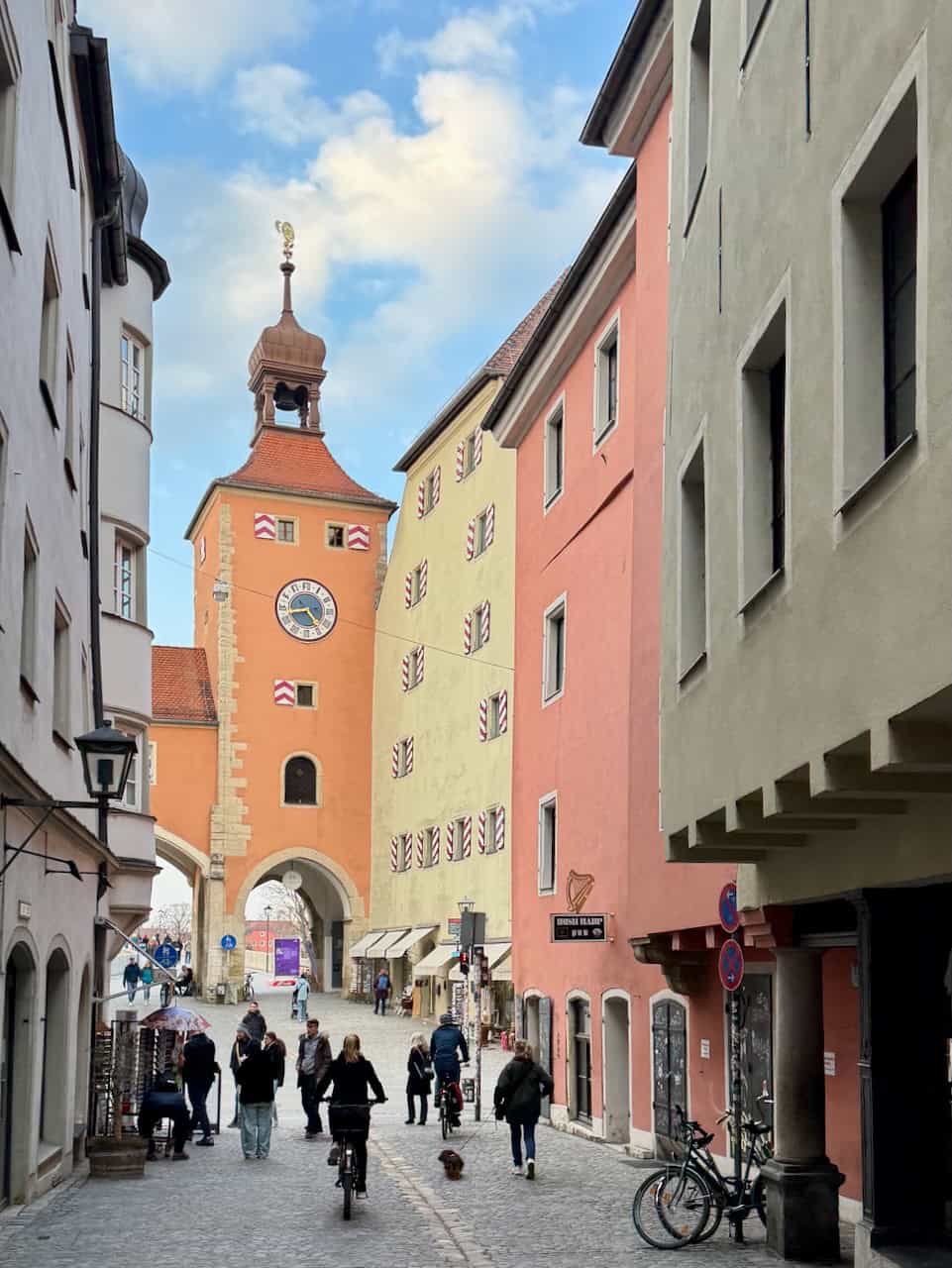
My favourite thing to do was to simply explore the old town’s colourful streets and alleys. There are so many interesting things to discover, like parts of ancient Roman walls, towering medieval castles and different architectural styles. There’s also a countless number of cafés, wine bars, restaurants, boutiques and deli’s.
St. Peter Cathedral
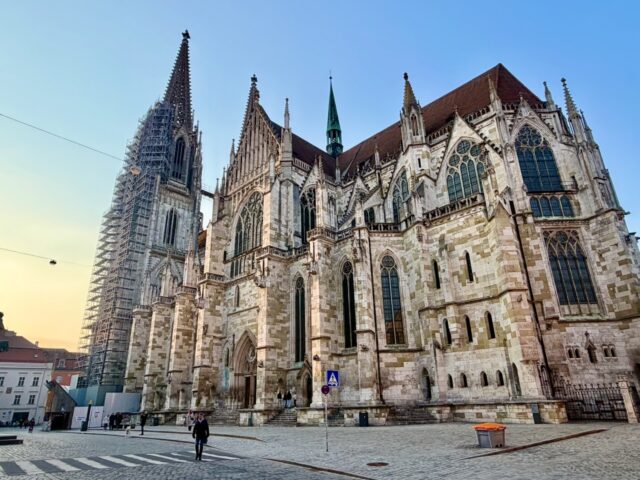
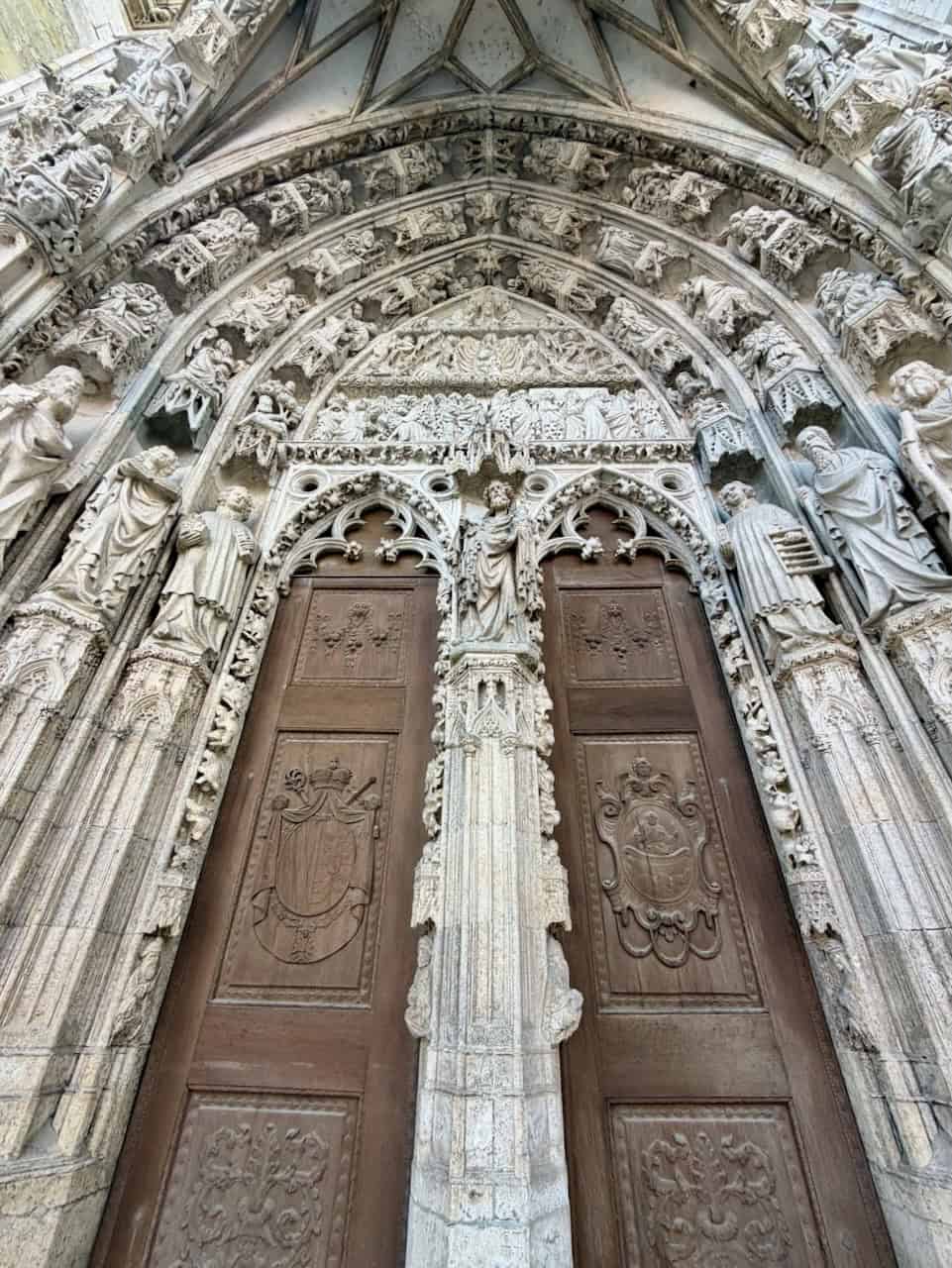
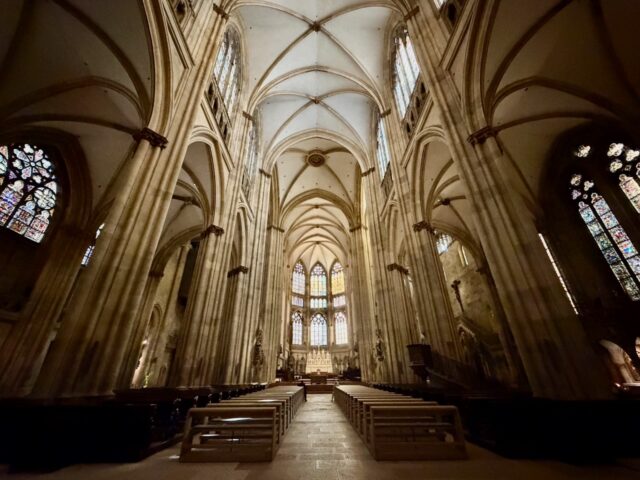
An iconic landmark in the city, the Cathedral was built in the 13th/14th century and is one of the most important Gothic structures in Germany. Its twin towers and spires, and nave are awe-inspiring, as are its incredibly well-preserved stained glass windows, some of which are the originals from the 13th century! The intricate spires were completed in 1869.
Stone Bridge
A masterpiece of medieval architecture, the Stone Bridge was built in the 12th century and remained the city’s only bridge across the Danube River until the 1930’s. Three towers once guarded the bridge but only one remains, the Bridge Tower (Brückturm) on the city side.
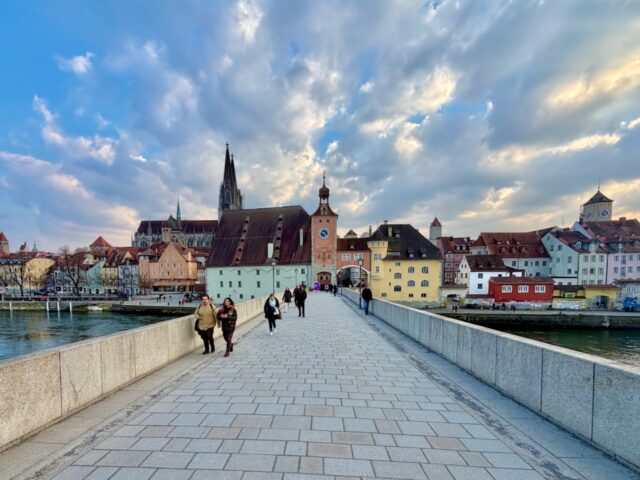
The bridge is now only open to pedestrians and cyclists. I recommend walking to the middle of the bridge just before sunset to enjoy the river- and city views.
Goliathhaus
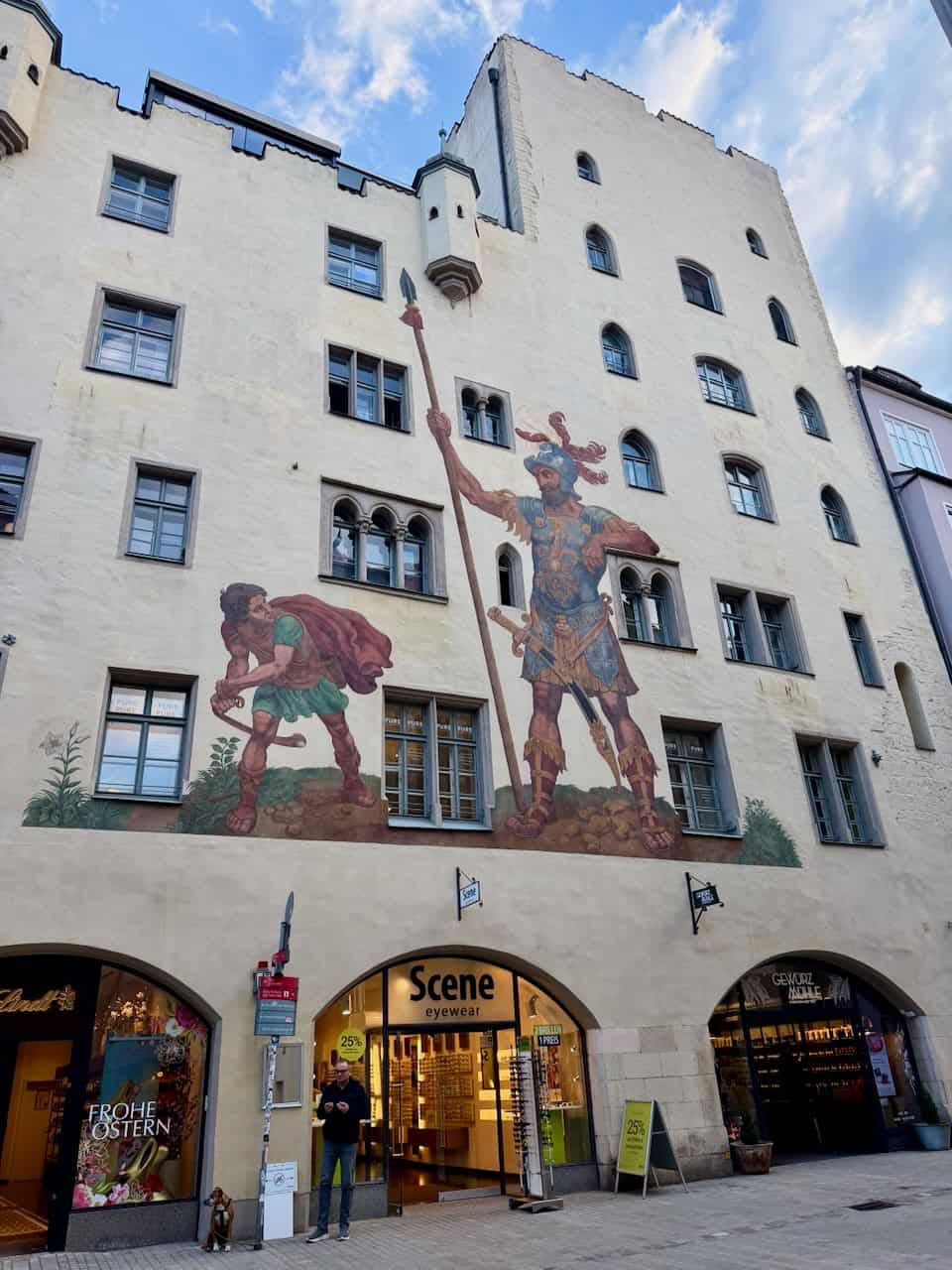
Located up the road from the Bridge Tower, the Goliathhaus is a 13th century patrician house made famous by the painting of David and Goliath (1573) on its façade.
Basilica of the Nativity of Our Lady
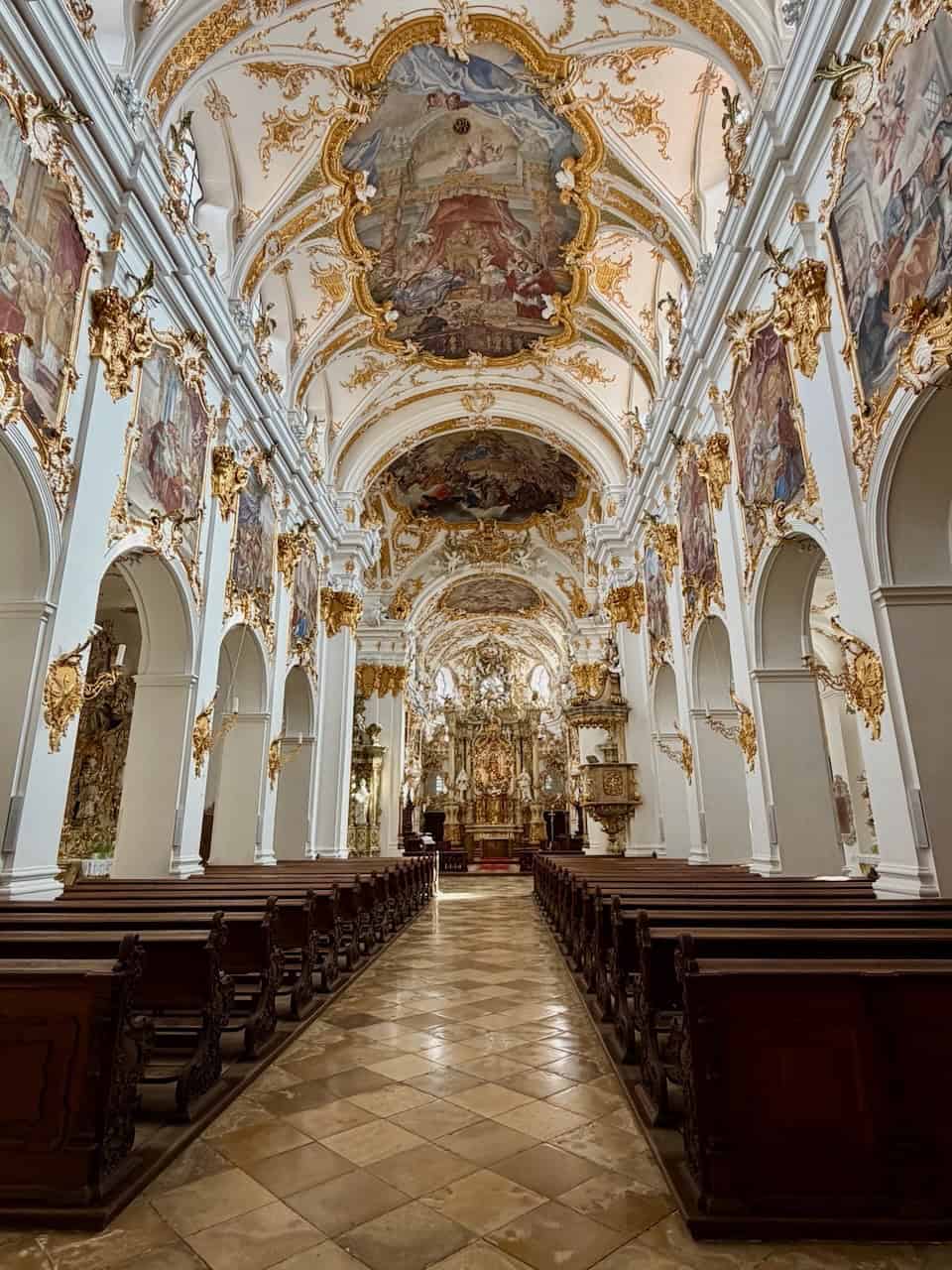
One of the oldest and most important Catholic churches in Bavaria, the Basilica was built as part of an abbey in the 11th century. In the 18th century, it received a Baroque/Rococo makeover, which is what visitors see today. Unassuming on the outside, its interior is nothing short of breathtaking.
Porta Praetoria
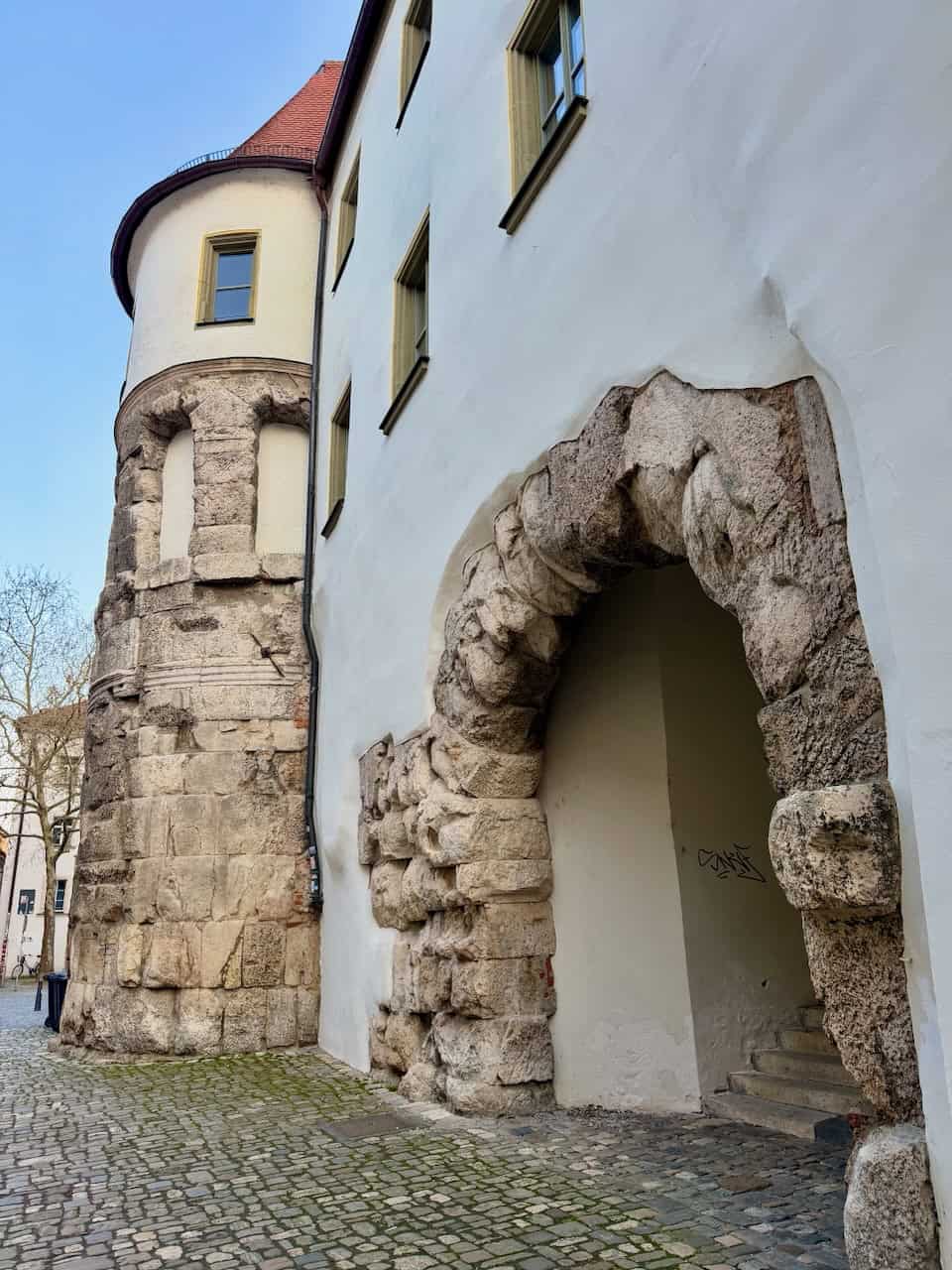
Regensburg was founded in the 1st century AD as a Roman fortress. Parts of this ancient Roman past can still be seen today, most notably the Porta Praetoria, which used to be one of the fortress gates.
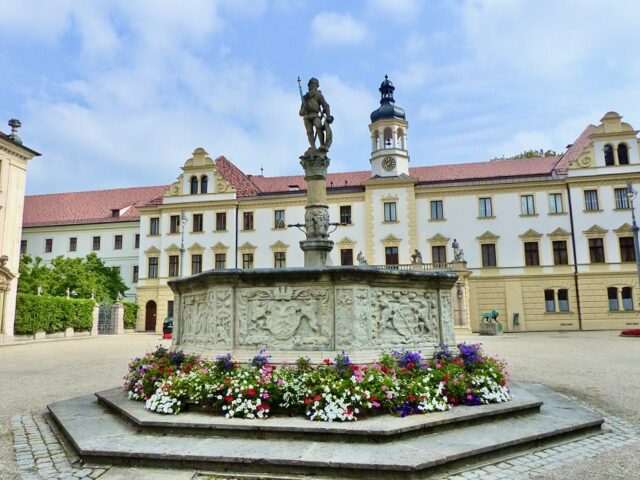
Schloss St. Emmeram, Thurn & Taxis
Since 1812, St. Emmeram Abbey in Regensburg has belonged to the Thurn and Taxis family, who transformed it into one of Europe’s largest private palaces. Originally a monastery, it now showcases centuries of history, from medieval cloisters to Rococo splendour and remarkable treasures reflecting noble life and craftsmanship.
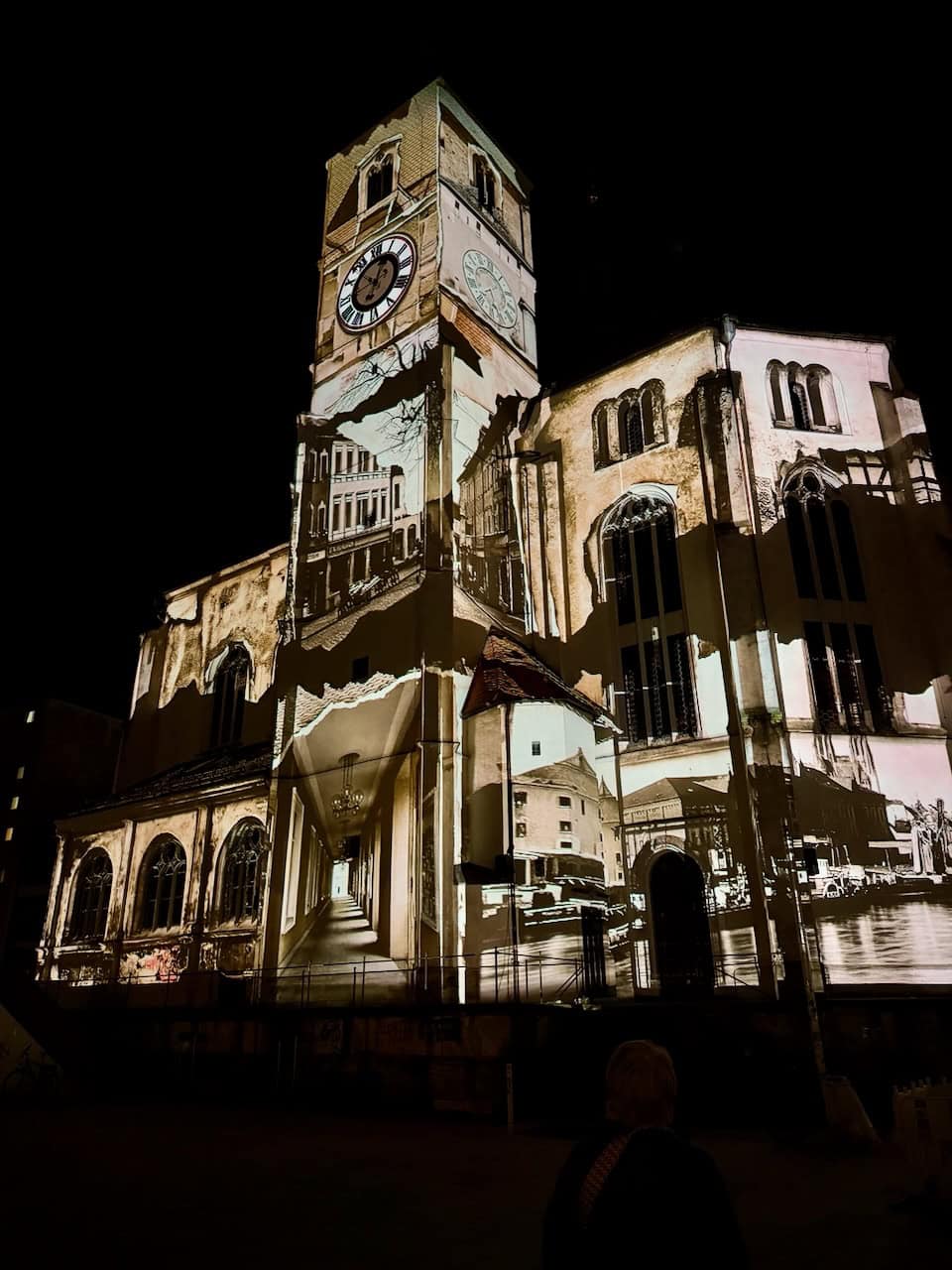
Re-light
My visit coincided with the international light art festival, Re-light. Held every two years in March, the festival features artistic light installations at numerous locations across the old town.
Where to stay in Regensburg
I recommend Hotel Das Regensburg, a delightful hotel in the historic centre yet just a 7-minute walk from the train station. There’s also a parking garage next door to the hotel.
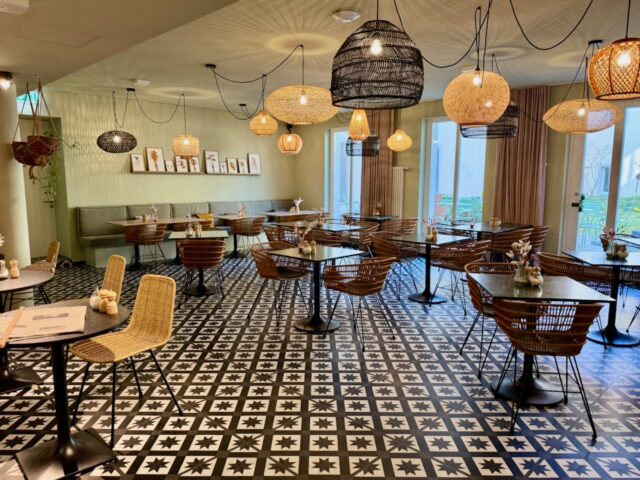
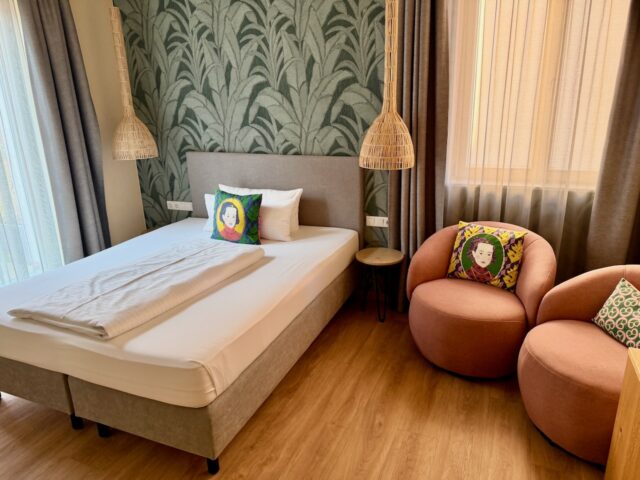
The hotel has spacious rooms with very comfortable beds, a lovely courtyard and a cheery breakfast room. I especially love how the hotel pays hommage to Barbara Blomberg, a Regenburger in the 16th century who rose to prominence from a simple background.
Search for accommodations in Regensburg (Booking.com).
Where to eat in Regensburg
Würzburg
The final stop of my southern Germany rail tour was Würzburg (map), where Baroque splendour meets Franconian joie de vivre. A city of towering spires and domes, Würzburg effortlessly combines a rich history and grand historic monuments with a youthful vibe. It’s a real joy to wander around its streets and admire its beautiful architecture, and soak up the laid-back atmosphere. Situated on the banks of the Main River and surrounded by vineyard-clad hills, Würzburg also enjoys a gorgeous location and a wonderful wine culture.
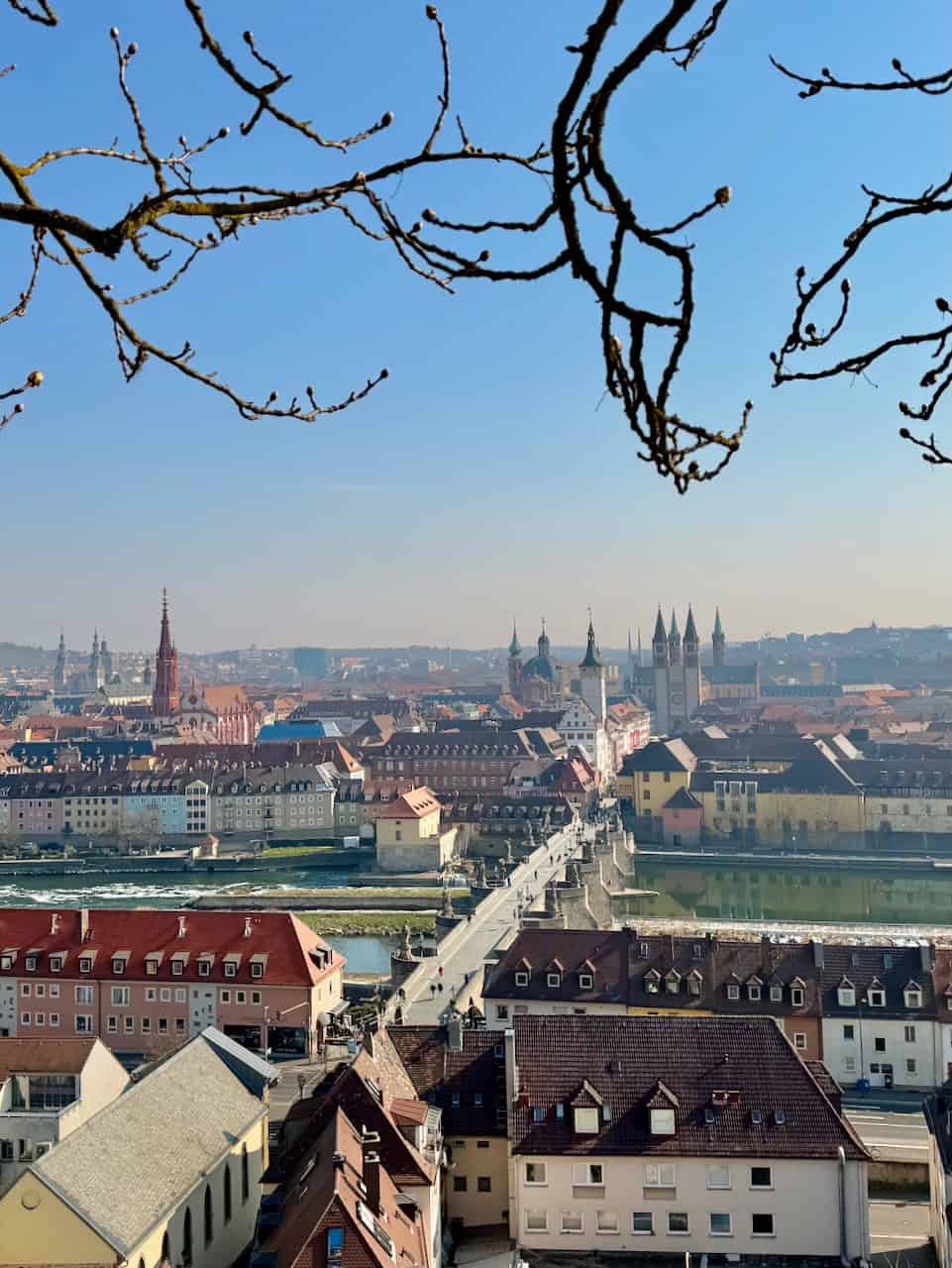
Highlights of Würzburg
Würzburg is one of those cities best savoured slowly. As I wandered through its streets, I found myself uncovering a wealth of beautiful and intriguing spots. What struck me first was the sheer number of churches, each more grand and imposing than the last. Had someone asked me to point out the cathedral, I would almost certainly have chosen the wrong one.
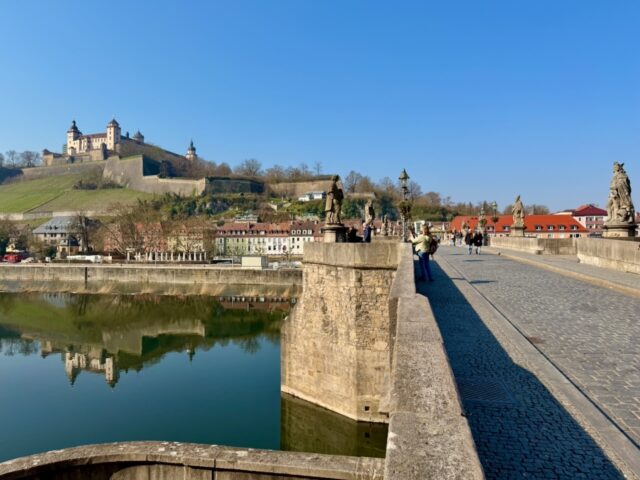
The city was decimated during WWII but its historic buildings were painstakingly rebuilt. During my few days there, I got to see many of these restored monuments, immerse myself in the wonderful ambiance, visit the city’s gargantuan wine cellars, admire the magnificent Residenz palace and revel in the fun of the Spring Bierfest.
Marienberg fortress
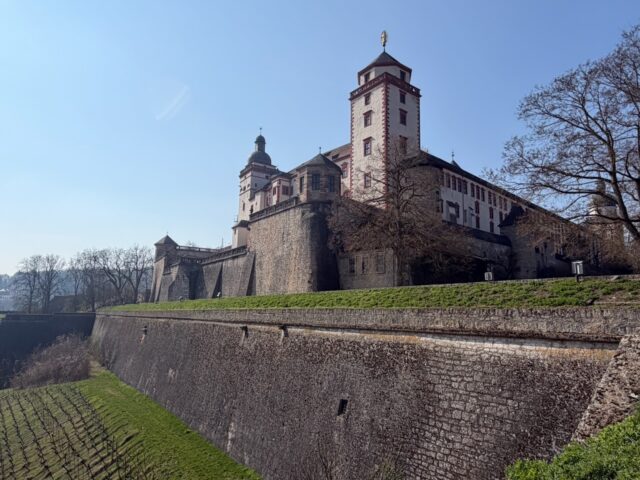
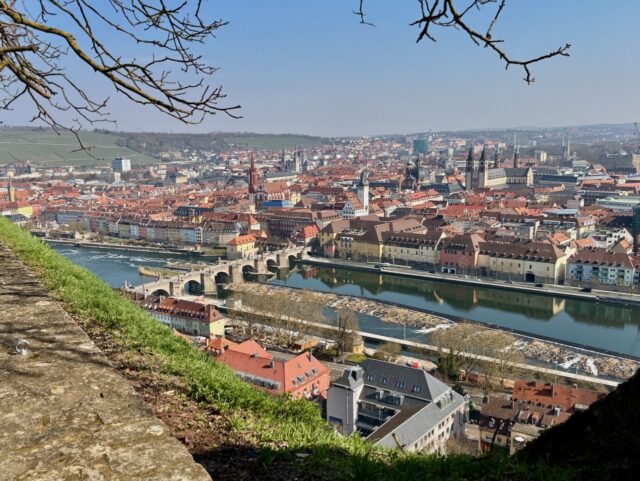
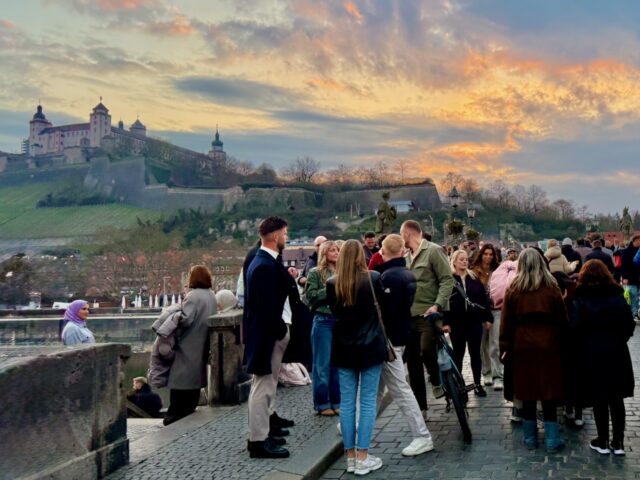
Perched on a hill across the Main River from the city centre, the Marienberg fortress served as the residence of the local prince-bishops for almost five centuries. These days, it’s a museum with a fascinating collection of historic and religious artifacts, and its terrace offers panoramic views of the city.
Old Main Bridge
The Old Main Bridge or Alte Mainbrücke crosses the Main River and was built in the 15th century to replace a 12th century Romanesque bridge. Built in the Baroque style, the stone arch bridge is adorned with twelve statues of saints and historically important figures such as Charlemagne.
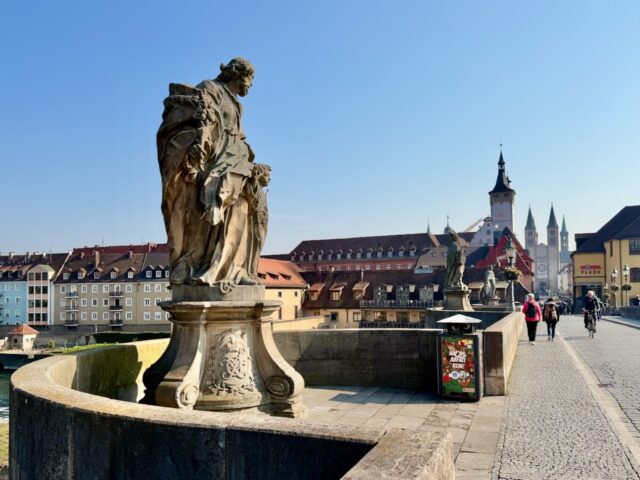
One of the top things to do in Würzburg is to join the locals for a Brückenschoppen, a glass of wine on the bridge at sunset. It’s a wonderful experience that shouldn’t be missed.
Falkenhaus and St. Mary’s Chapel
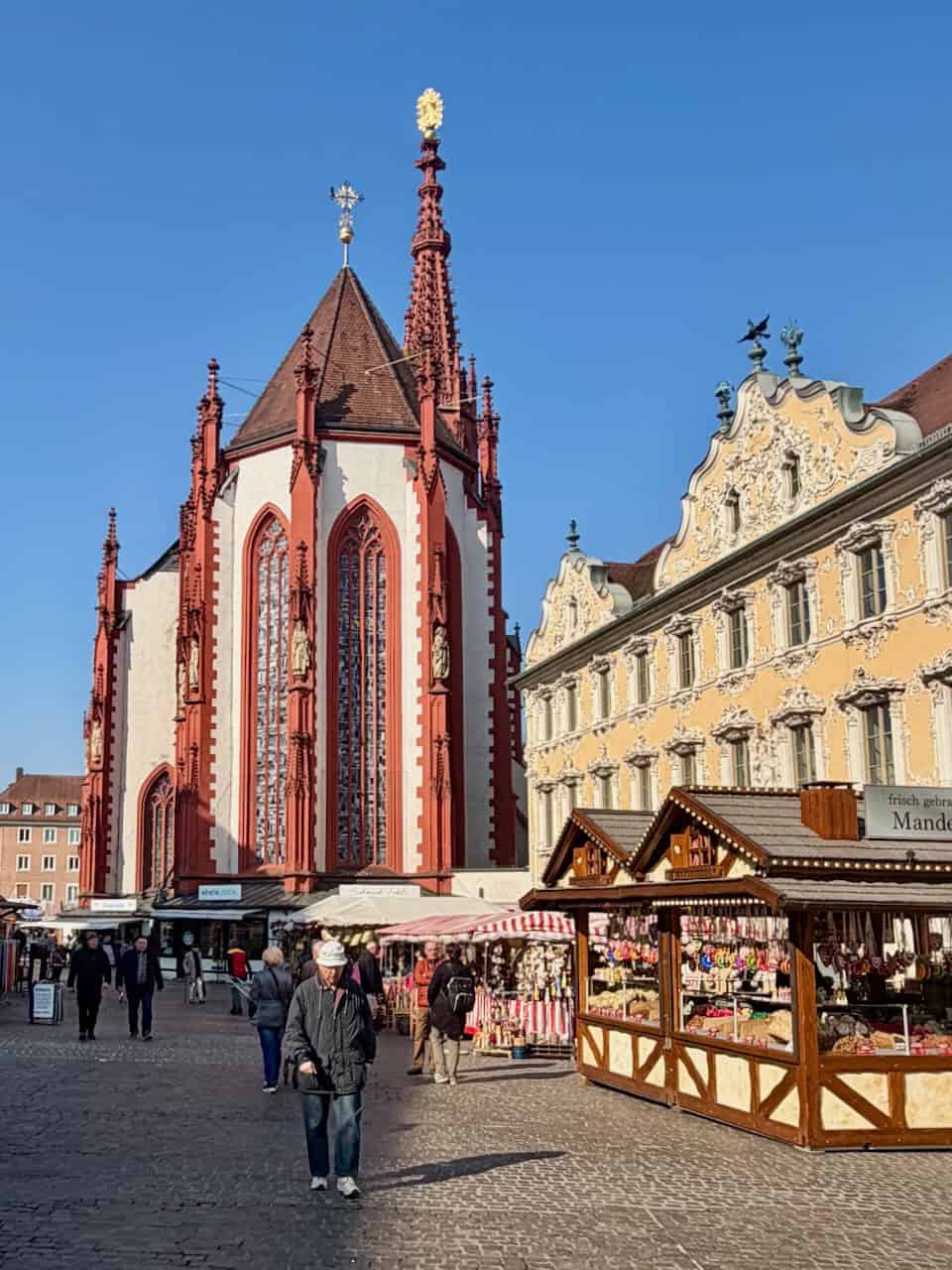
Located at Marktplatz (Market Square), this bright yellow building in Rococo style is absolutely gorgeous. Severely damaged during WWII, the Falkenhaus now houses the tourist office. A stone’s throw from the Falkanhaus, St. Mary’s Chapel is a 14th century Catholic chapel in the Gothic style. Also damaged during WWII, the chapel was lovingly restored in the 1950’s.
Residenz palace
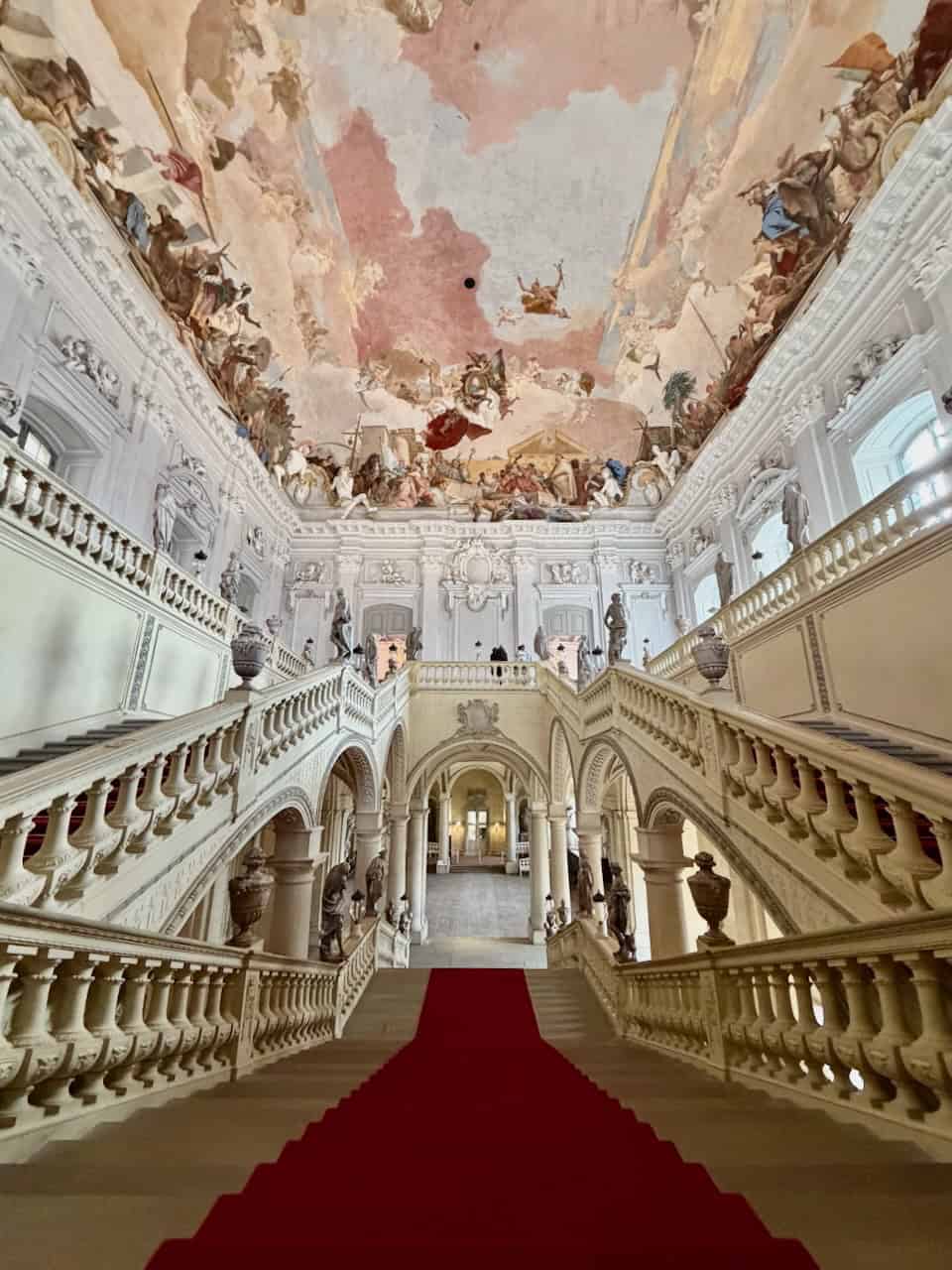
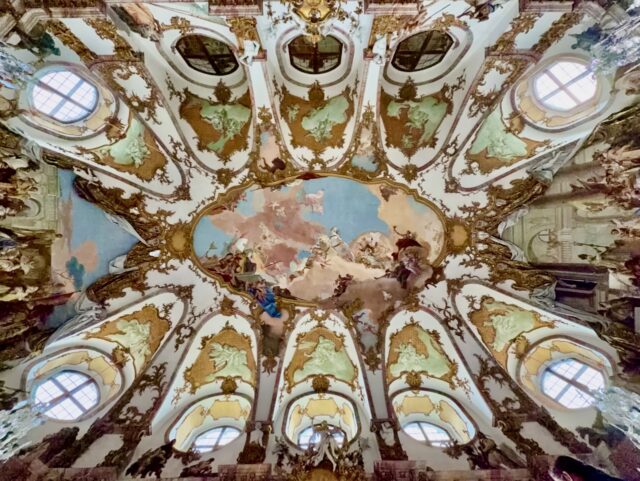
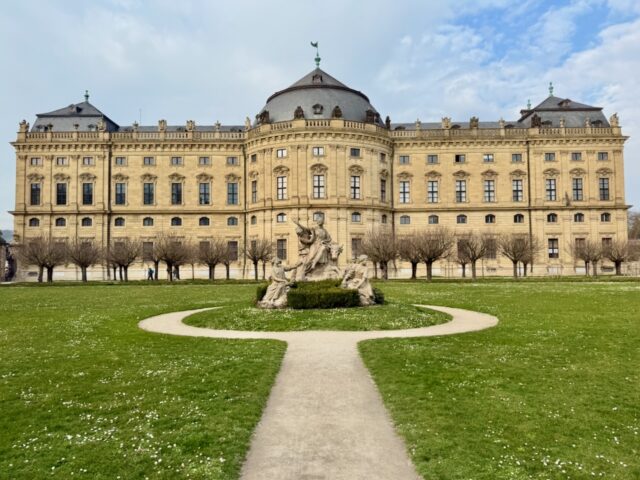
A UNESCO World Heritage site, the 18th century Würzburg Residenz is a grand palace that’s famous for its opulent Baroque/Rococo architecture and frescoes. Modelled after palaces in Versailles and Schönbrunn, the Residenz is a true masterpiece.
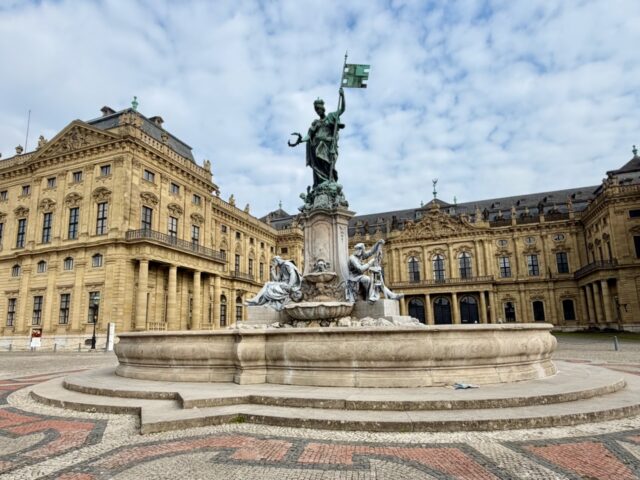
The highlights include the grand staircase, White Hall, Court Chapel and the breathtaking Imperial Hall. I also enjoyed walking around the beautiful Court Gardens.
St. Kilian’s Cathedral and New Minster
Adjacent to each other, the Cathedral and New Munster are two of the most impressive religious buildings in Würzburg. The 11th century Romanesque Cathedral, dedicated to St. Kilian, is a masterpiece of German architecture from the Middle Ages.
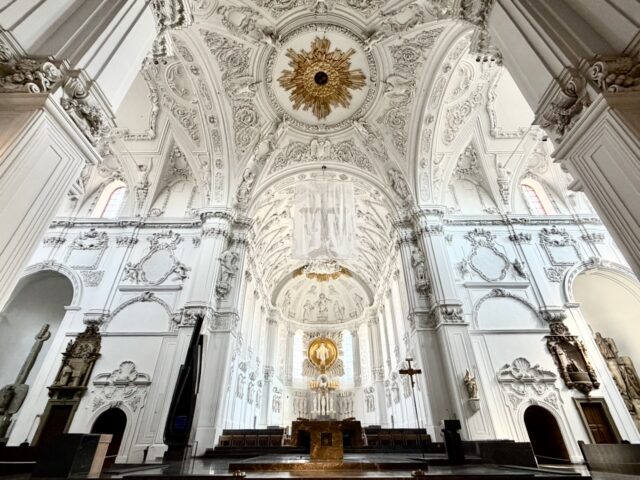
The New Munster, also from the 11th century, was built in the Romanesque style but has a sumptuous, 18th century Baroque façade and dome. The church was the temporary seat of the Bishop of Würzburg after WWII as the Cathedral had suffered massive damage.
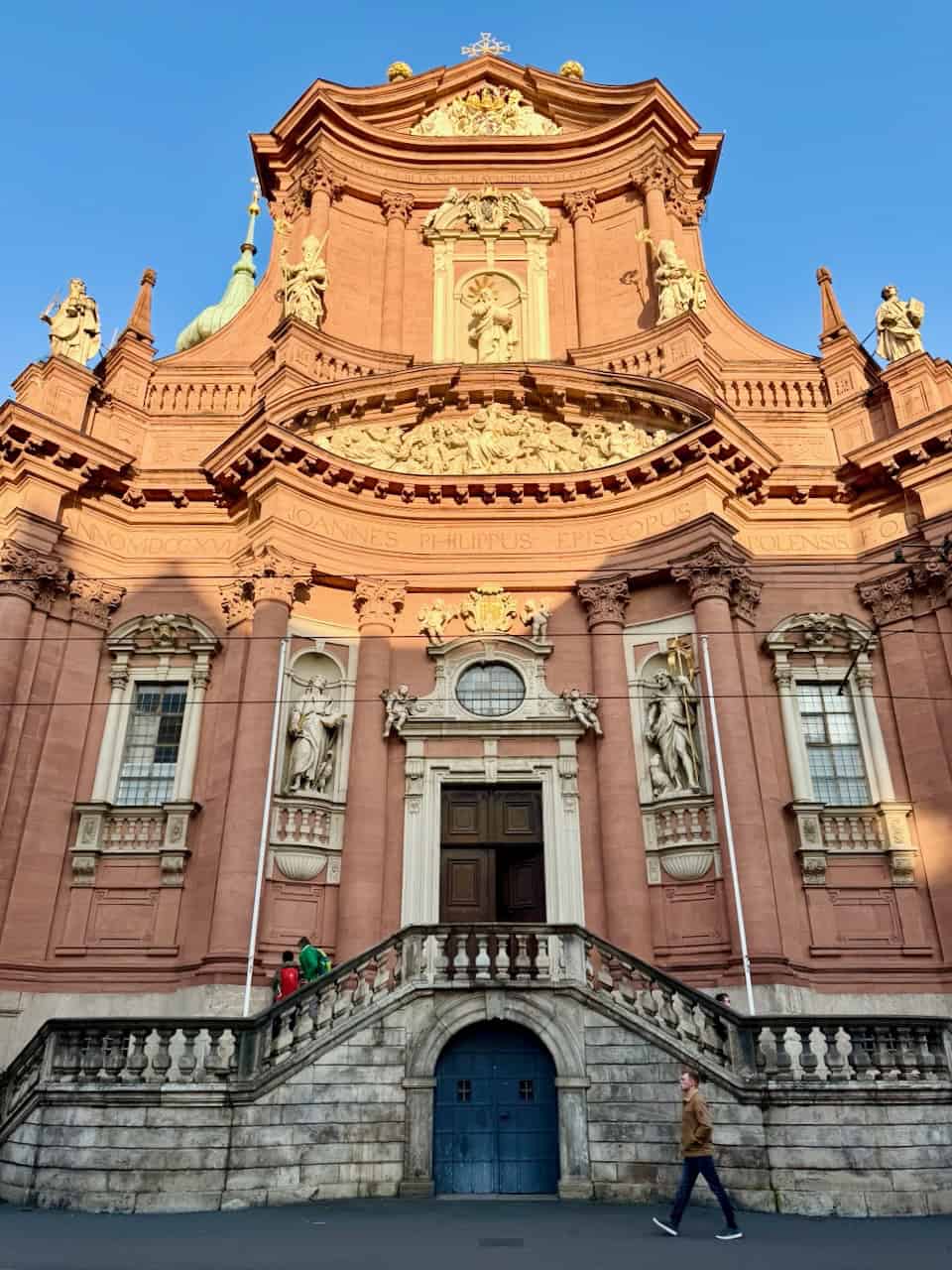
City wine cellars
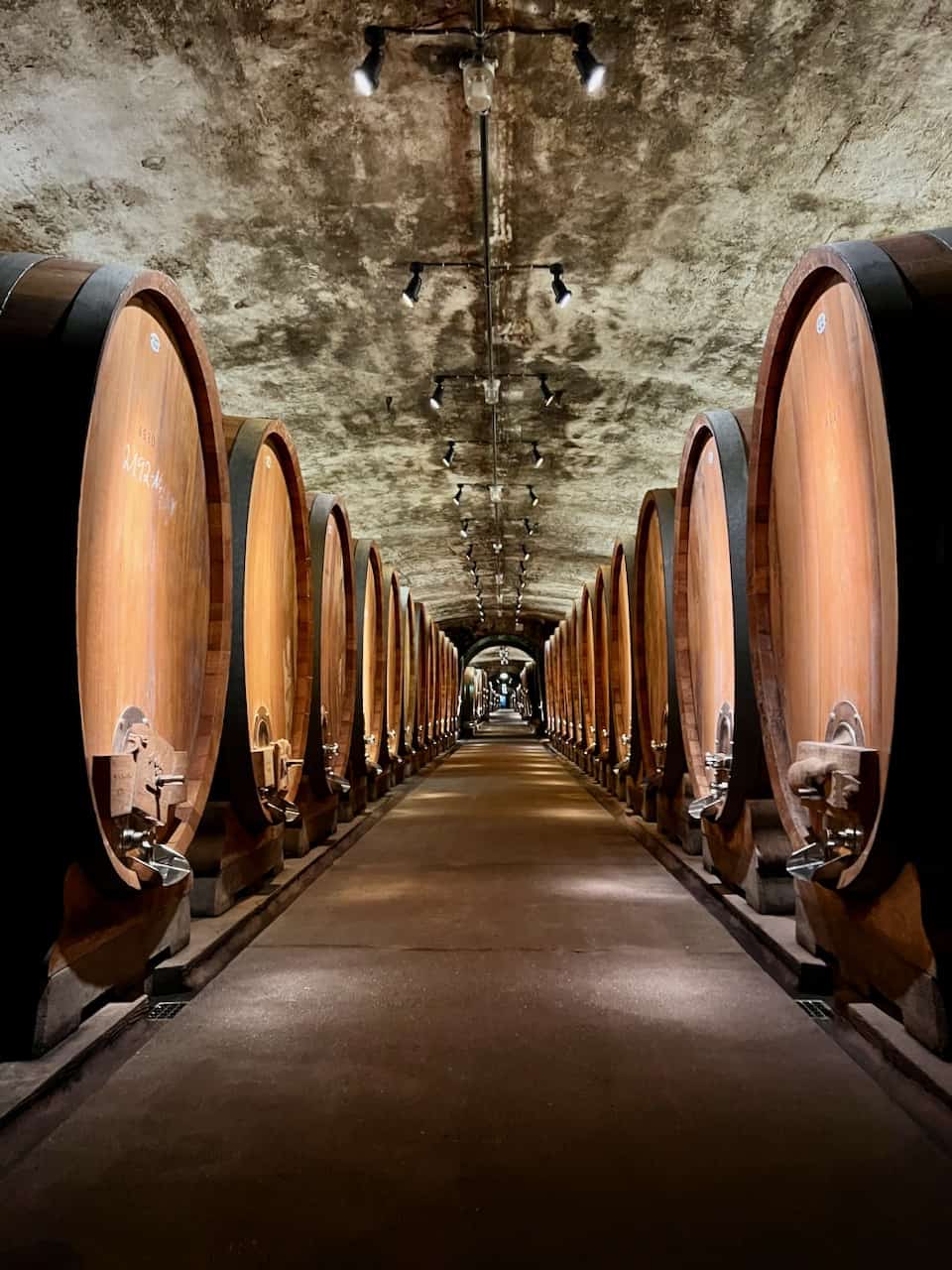
Würzburg has a centuries-old wine culture that’s best experienced in one of its wine cellars. These massive wine cellars are quite literally underground labyrinths that stretch as far as the eye can see. The most famous cellars are the 18th century Hofkeller under the Residenz palace, the 14th century Bürgerspital and the 16th century Juliusspital.
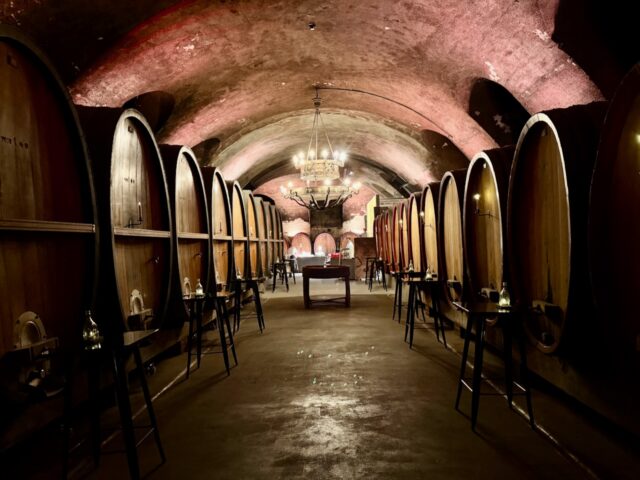
One of the oldest wineries in Germany, Bürgerspital has a fascinating history in the sense that it’s a hospital with a winery – proceeds from wine sales help to fund the hospital. These days, it’s one of the biggest wineries in Germany and funds numerous retirement homes.
Another winery in the city with a similar set-up is Juliusspital, which is also one of Germany’s oldest and largest wineries, and still functions as a hospital and retirement home. A tour of (one of) these wine cellars combined with a wine-tasting shouldn’t be missed!
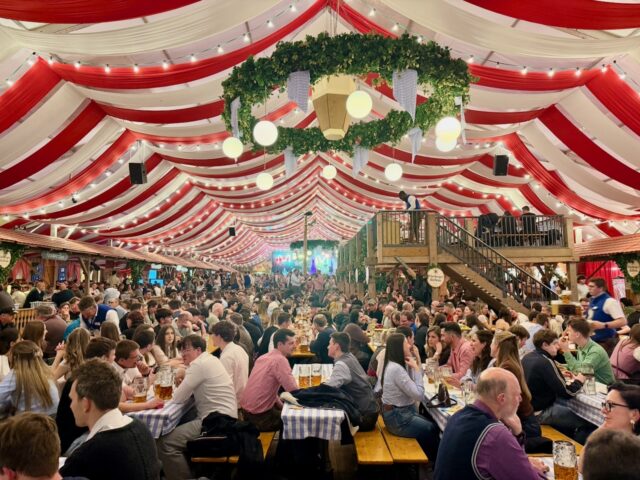
Spring Beerfest
During my last evening in Würzburg, I was invited to join the spring beerfest at the Würzburger Frühjahrsvolksfest – a fun fair and beer festival held to celebrate the arrival of spring. It’s a boisterous affair with music, dance, local food and LOTS of beer! If you’re looking for a more local ‘Oktoberfest’ beer festival experience earlier in the year, make a note of this event.
Read more about things to see and do in Würzburg.
Where to stay in Würzburg
I had an enjoyable stay at the colourful Barthels Boutique Hotel. Very centrally located, the hotel has comfortable rooms, a cool bar/lounge and a rooftop terrace with wonderful views!
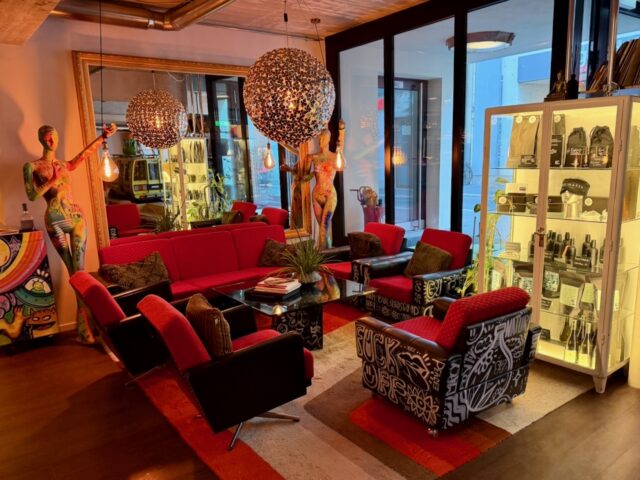
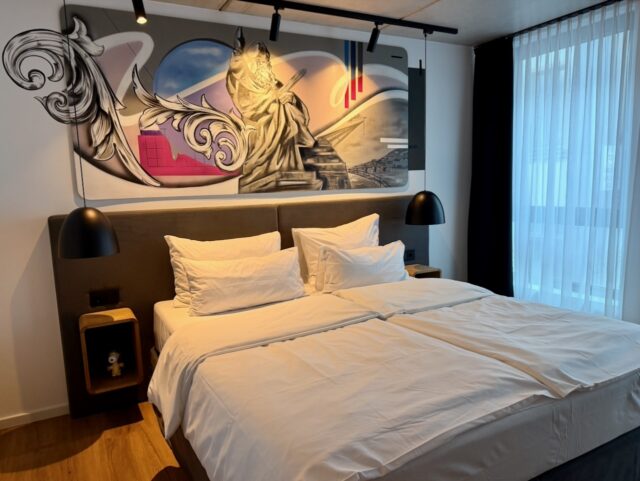
Search for accommodations in Würzburg (Booking.com).
Where to eat in Würzburg
One restaurant that shouldn’t be missed is the Alte MainMühle, located next to the Old Main Bridge. The food and the wines are simply top-notch!
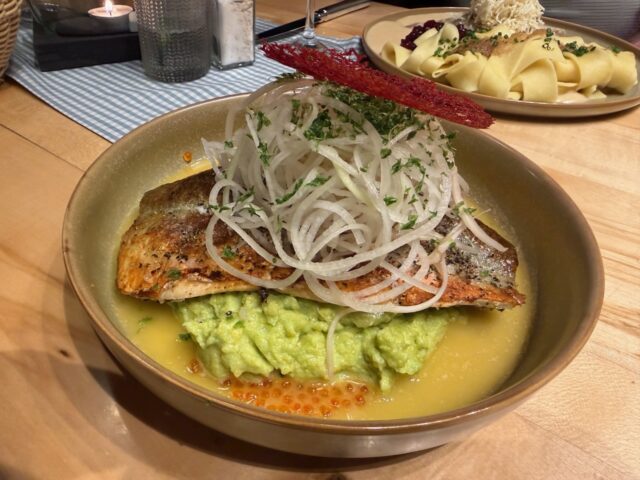
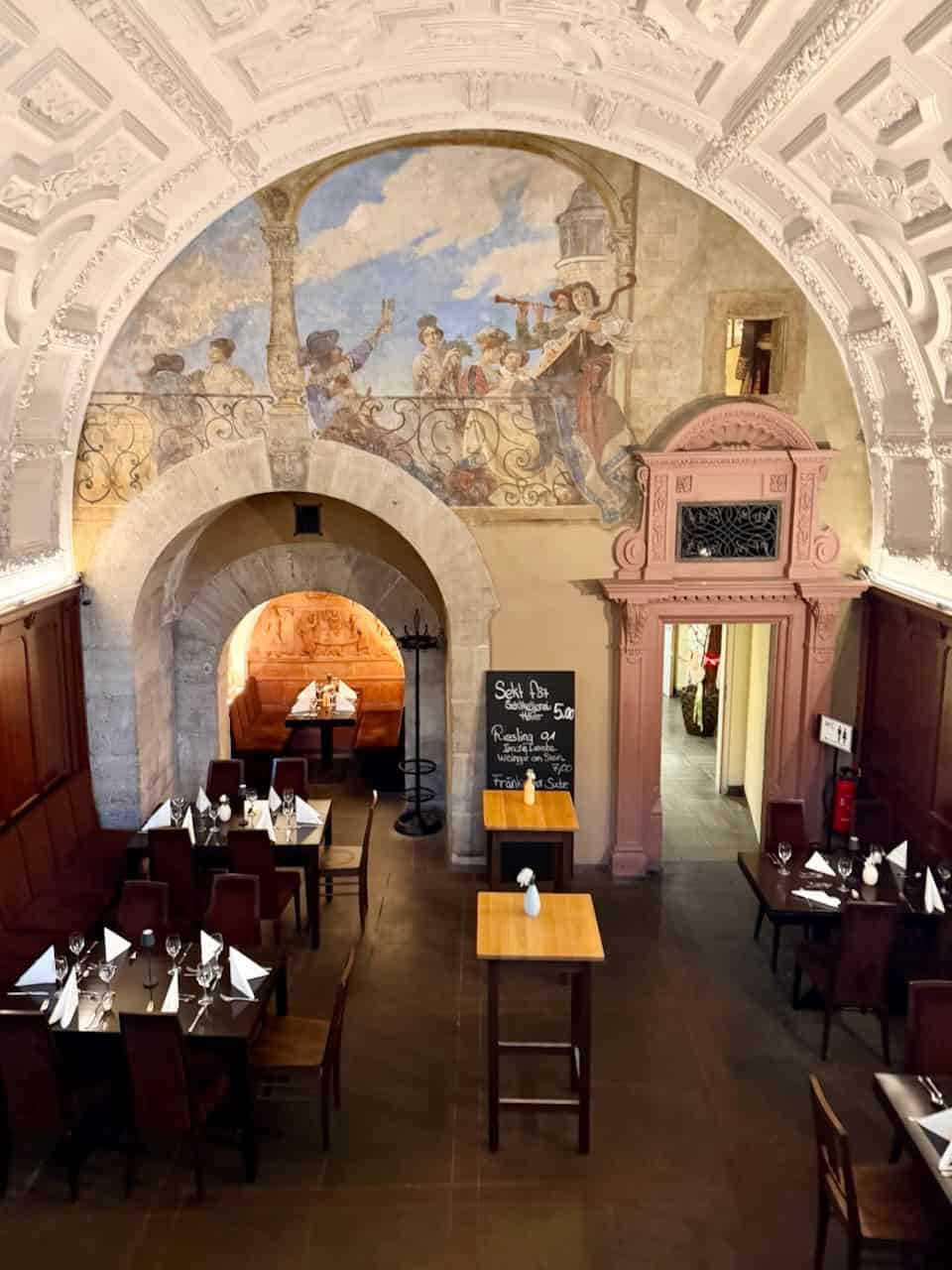
I can also recommend the Ratskeller for a more traditional Franconian meal in an impressive vaulted space.
This was a rail journey full of wonders through the historic highlights of southern Germany, made even more special by the chance to visit various spring events! It served as yet another reminder of the incredible array of history and beauty in this part of Germany.
There are many great reasons to visit Germany and one point that stands out is its vast rail network. For this trip, I combined tickets with reserved seats on the ICE (InterCity Express high-speed trains) with the Deutschland Ticket, a monthly subscription ticket (€63/month) which covers unlimited travel on regional rail lines and local public transport.
Read about my other rail and road trips in Germany: